 Épingler
 My kitchen scales had been gathering dust until the day I decided enough was enough with takeout bowls that left me sluggish by mid-afternoon. Standing in front of my fridge with a head of cauliflower and some chicken breast, I remembered my neighbor casually mentioning how she'd stopped feeling deprived once she learned to make her own burrito bowls. That afternoon, something clicked when I tasted that first forkful of cauliflower rice kissed with lime and cilantro—bright, alive, and somehow more satisfying than the heavy versions I'd been ordering. It turned out I wasn't craving less; I was craving better.
I made this for my sister when she was visiting, worried it would feel like I was serving her diet food disguised as a meal. She took one bite, raised her eyebrows, and asked for the recipe before even finishing her bowl. That's when I realized this wasn't about restriction—it was about discovering that good ingredients and proper seasoning make a bigger difference than portion size ever could.
Ingredients
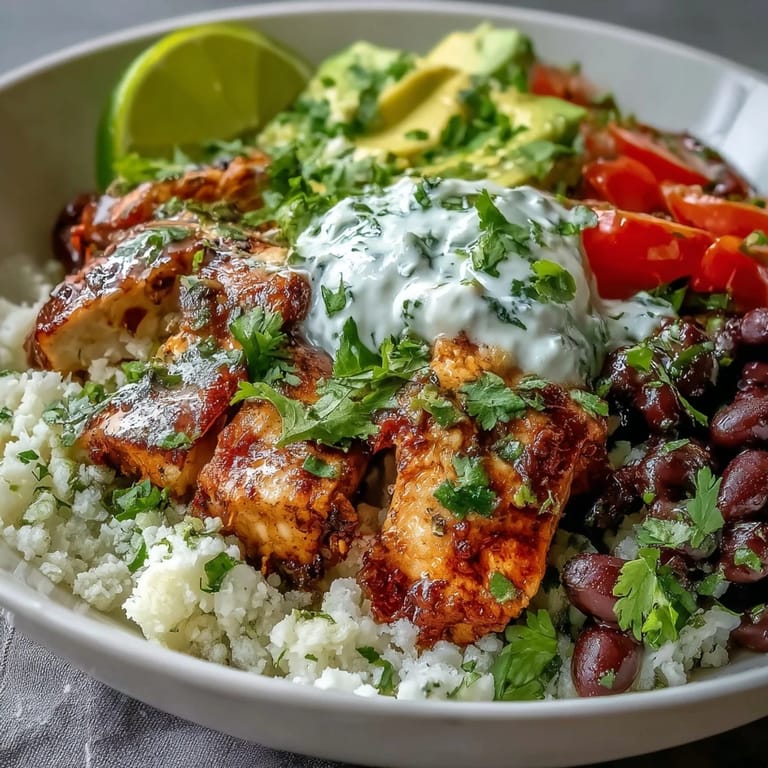
- Cauliflower florets (1 1/2 cups): The foundation of this bowl, and honestly the star—pulsing them into rice-sized pieces in a food processor takes seconds and feels like a small kitchen magic trick.
- Olive oil (1 1/2 teaspoons total): Split between cooking the cauliflower rice and the chicken, it's measured carefully but generously enough that nothing tastes sparse.
- Fresh lime juice (1 tablespoon): This ingredient does the heavy lifting for flavor; fresh squeezed makes all the difference in brightening the entire bowl.
- Fresh cilantro (3 tablespoons combined): Some people say cilantro tastes like soap, but if you're a fan, this herb is what makes the bowl feel restaurant-quality.
- Chicken breast (3 oz boneless, skinless): Lean protein that cooks quickly when you pound it slightly to even thickness, though I've learned to resist the urge to cook it past doneness.
- Spice blend (chili powder, cumin, garlic powder): Each spice is just 1/4 teaspoon, but together they create a flavor profile that makes you forget you're eating something calculated.
- Black beans (1/4 cup canned, rinsed): Rinsing them removes sodium and that canned metallic taste; they add fiber and earthiness without weighing the bowl down.
- Cherry tomatoes (1/4 cup halved): Their sweetness and slight acidity balance the richness of the avocado perfectly.
- Red onion (1/8 cup diced): Raw and sharp, it provides textural contrast and a bite that keeps every spoonful interesting.
- Avocado (1/4 medium, sliced): A quarter avocado gives you creamy richness without tipping the calorie count; slice it right before assembling so it stays bright green.
- Greek yogurt (1 tablespoon): Creamy and tangy, it replaces heavier sour cream while adding a protein boost.
- Lime wedge: Squeeze it over everything right before eating; it wakes up flavors and ties the whole bowl together.
Tired of Takeout? 🥡
Get 10 meals you can make faster than delivery arrives. Seriously.
One email. No spam. Unsubscribe anytime.
Instructions
- Transform your cauliflower into rice:
- Pulse your cauliflower florets in a food processor until they resemble grains of rice—about 10 to 15 pulses should do it, and watching them break down is oddly satisfying. If you don't have a processor, a good knife and patience work too, though your knuckles might not thank you.
- Cook the cauliflower rice with intention:
- Heat that teaspoon of olive oil in a non-stick skillet over medium heat, then add your cauliflower rice and stir frequently for 3 to 4 minutes until it's just tender. You'll hear it sizzle softly and smell something faintly nutty—that's your cue it's working.
- Finish the rice with brightness:
- Once the cauliflower has softened slightly, turn off the heat and stir in your lime juice, chopped cilantro, salt, and pepper all at once. The warmth releases the cilantro's oils, and suddenly your rice smells like a fresh lime grove instead of plain vegetables.
- Season your chicken with confidence:
- Combine your chili powder, cumin, garlic powder, salt, and pepper in a small bowl and coat your chicken breast generously on both sides. This seasoning step is where the magic starts—don't skip it, and don't be shy with the spices.
- Cook the chicken until golden and cooked through:
- Heat that half teaspoon of olive oil in your skillet over medium heat, then lay in your seasoned chicken and cook for 3 to 4 minutes per side until the outside is golden and the inside is no longer pink. Let it rest for 2 minutes after cooking—this keeps it moist and tender—then slice or dice it into bite-sized pieces.
- Build your bowl with intention:
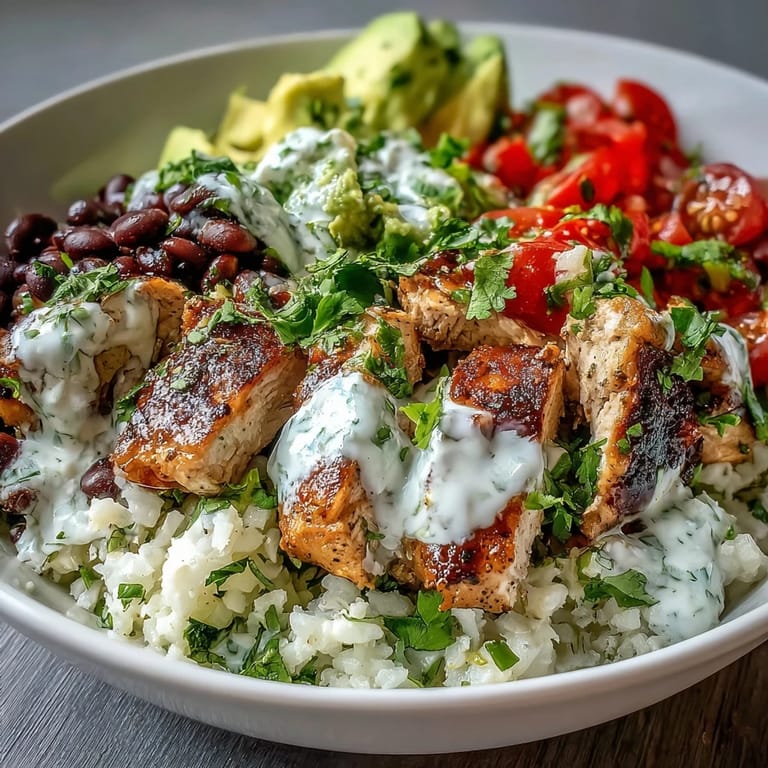
- Start with your warm cauliflower rice as the base, then arrange your cooked chicken, black beans, cherry tomatoes, red onion, and avocado slices on top like you're composing something beautiful. The arrangement might seem silly, but eating something that looks appealing changes how it tastes.
- Add the finishing touches:
- Top everything with a dollop of Greek yogurt, scatter fresh cilantro leaves across the top, and serve with a lime wedge to squeeze over at the last moment. That squeeze of lime right before your first bite is essential—it pulls all the flavors together in a way that feels deliberate and complete.
 Épingler
 There was a Tuesday evening when I'd made this bowl after a long day, ate it while standing at my kitchen counter in silence, and realized I wasn't white-knuckling through a restrictive meal—I was genuinely enjoying my dinner. That moment, when healthy eating stopped feeling like deprivation and started tasting like choice, changed how I approach cooking for myself.
The Cauliflower Rice Game-Changer
Cauliflower rice used to feel like a sad compromise until I actually started treating it like a real ingredient instead of a substitute. The moment I realized it deserved seasoning, fat, and attention—just like any other grain—everything shifted. Now I keep pre-riced cauliflower in my freezer for nights when my food processor feels too ambitious, though fresh always tastes cleaner and cooks in just those few minutes.
Why This Bowl Stays on My Weekly Rotation
Part of why I keep making this is that it's flexible enough to adapt without falling apart. On mornings when I'm meal prepping for the week, I cook the cauliflower rice and chicken in advance, then assemble everything fresh when I'm ready to eat—the avocado stays bright, the cilantro stays perky, and lunch doesn't feel like yesterday's leftovers. The bowl also doesn't require you to choose between taste and calories, which is the whole reason I started making it in the first place.
Small Tweaks That Make It Your Own
Once you've made this bowl a few times, you'll start seeing it as a template instead of a strict recipe. I've added jalapeños when I wanted heat, swapped the chicken for grilled tofu when I was in the mood for something different, and even experimented with different beans when my pantry dictated it. The structure is strong enough to support those changes without becoming something unrecognizable.
- If you want to add cheese without blowing your calorie count, crumbled queso fresco adds flavor without taking up much room.
- A vegetarian version works beautifully if you double the black beans or add extra roasted chickpeas for crunch and protein.
- Keep lime wedges and extra cilantro on hand because those last-minute additions are what transform a meal into something memorable.
 Épingler
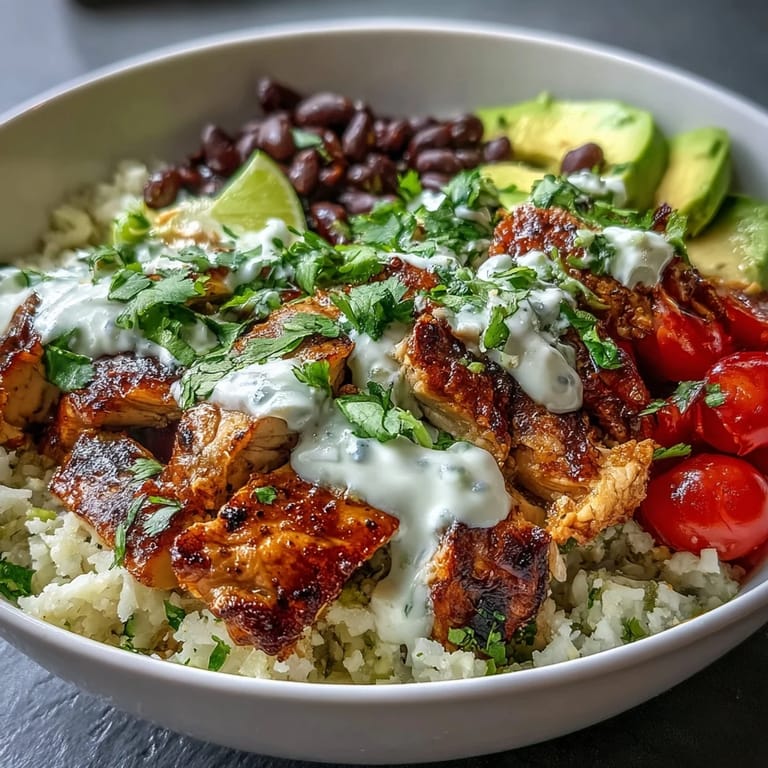
 This bowl proved to me that eating well doesn't mean eating small or eating boring. It means paying attention to ingredients, respecting flavors, and showing up for yourself with a meal that's worth the minimal effort.
Questions fréquentes sur la recette
- → Combien de calories contient ce bol burrito ?
Chaque bol contient environ 398 calories, avec 33g de protéines pour un repas rassasiant et nutritif.
- → Puis-je préparer ce bol à l'avance ?
Absolument. Préparez le riz de chou-fleur et le poulet à l'avance, puis assemblez le bol juste avant de servir pour conserver la fraîcheur des garnitures.
- → Quelle est la meilleure alternative au poulet ?
Vous pouvez remplacer le poulet par du tofu grillé ou simplement augmenter la portion de haricots noirs pour une version végétarienne riche en protéines.
- → Comment obtenir une texture parfaite pour le riz de chou-fleur ?
Pulsez le chou-fleur jusqu'à obtenir des grains de la taille du riz, puis faites-le revenir 3-4 minutes pour qu'il reste légèrement croquant et non pâteux.
- → Peut-on congeler les restes ?
Le riz de chou-fleur et le poulet se congèlent bien séparément. Ajoutez les garnitures fraîches après décongélation pour une texture optimale.