 Épingler
 The first time I made Kuwaiti biryani, my grandmother stood at my elbow in the kitchen, watching the ghee sizzle and the spices release their golden perfume into the air. She never gave me recipes written down, only gestures and gentle corrections—a pinch more cumin here, patience with the onions there. That dish took nearly two hours, but what emerged from the oven was pure magic: layers of saffron-touched rice, tender meat, and an aroma so commanding it silenced everyone at the table before the first bite.
I made this for my friend Amir on a Friday evening, and he closed his eyes after the first taste. When he opened them, he said it reminded him of his mother's kitchen in Kuwait City, which somehow felt like the highest compliment. That's when I understood that biryani isn't just rice and meat—it's an invitation to remember, to gather, to let people feel at home at your table.
Ingredients
- Bone-in chicken or lamb (900 g): Bone adds flavor and richness that boneless cuts simply can't match; ask the butcher to cut pieces roughly equal so they cook evenly.
- Plain yogurt (1 cup): Full-fat yogurt is your secret weapon for tender meat; it's the acid and enzymes that work their magic overnight.
- Lemon juice (2 tbsp): Brightens the marinade and helps break down the meat fibers without overpowering the spices.
- Ginger-garlic paste (1 tbsp): Make this fresh if you can; jarred works but fresh has a cleaner bite that sings in biryani.
- Ground turmeric, cumin, coriander, chili powder, garam masala (measured together): These are the soul of the dish—buy them whole and grind if possible, or from a spice merchant who moves inventory quickly.
- Basmati rice (3 cups): Don't skimp here; proper basmati has long grains that stay separate and absorb the flavoring so they practically glow.
- Ghee or butter (5 tbsp total): Ghee has a deeper, nuttier flavor, but butter works beautifully if that's what you have on hand.
- Whole spices for rice (cloves, cardamom, cinnamon, bay leaf): These aren't obstacles to pick out—they're flavor packages that perfume every grain as the rice cooks.
- Large onions (2), thinly sliced: Thin, even slices caramelize properly and become almost candy-like; rushing this step is the biggest mistake people make.
- Fresh coriander and mint (combined 3/4 cup): Use them generously; fresh herbs are what lift biryani from good to memorable.
- Saffron threads (pinch) soaked in warm milk (3 tbsp): Saffron is expensive but non-negotiable here; soak it to unlock its perfume and color, and that milk becomes a blessing poured over the rice.
- Toasted nuts and raisins (1/2 cup combined): Toast the nuts yourself to wake up their natural oils; they add texture and a gentle sweetness that plays perfectly against the spices.
- Fried onions (1/4 cup) for garnish: These are the final flourish—crispy, salty, they give you something to bite into alongside the soft rice.
Tired of Takeout? 🥡
Get 10 meals you can make faster than delivery arrives. Seriously.
One email. No spam. Unsubscribe anytime.
Instructions
- Build Your Marinade:
- Whisk together yogurt, lemon juice, ginger-garlic paste, and all the ground spices in a large bowl until the color is even and the aroma hits you immediately. Add your meat, turn it until every piece is coated, then cover and refrigerate for at least an hour, though overnight transforms the meat into something impossibly tender.
- Prepare the Rice:
- Rinse your basmati under cold water until the water runs clear—this removes excess starch and lets each grain stay separate and proud. Soak for 30 minutes so the grains plump slightly and cook more evenly.
- Parboil with Aromatics:
- Bring your 5 cups of water and salt to a rolling boil, then add the drained rice along with cloves, cardamom pods, cinnamon stick, and bay leaf. Cook for 6–7 minutes only, stirring gently once; the rice should still have a slight firmness at its center when you taste a grain.
- Caramelize the Onions:
- While the rice cooks, heat your ghee or oil in a heavy ovenproof pot over medium heat and add those thin onion slices. Don't rush this—let them soften, then gradually turn golden, then amber, roughly 12–15 minutes total. This is where patience pays dividends in flavor and color.
- Sear the Meat:
- Scoop out half the caramelized onions and set them aside for garnish, then nestle your marinated meat into the remaining onions in the pot. Sear it over medium heat for 5–7 minutes until the edges catch color, then lower the heat, cover, and let it braise gently for 20–25 minutes if using chicken, or 35–40 if using lamb, adding a splash of water if the bottom looks dry.
- Layer and Herbs:
- Scatter half your chopped herbs, raisins, and toasted nuts over the meat, then layer half the par-cooked rice over top. Add the remaining herbs, raisins, and nuts, finishing with all the remaining rice in an even layer.
- The Saffron Crown:
- Pour that precious saffron-milk mixture slowly and evenly across the top layer of rice so it seeps down and flavors everything. Dot the surface with small pieces of ghee or butter.
- Sealed and Slow-Baked:
- Preheat your oven to 180°C (350°F), then cover your pot tightly with foil before placing the lid on top—this seal is crucial so steam stays trapped and cooks everything through. Bake for 30–35 minutes until you hear a gentle sizzle if you listen closely.
- Rest and Fluff:
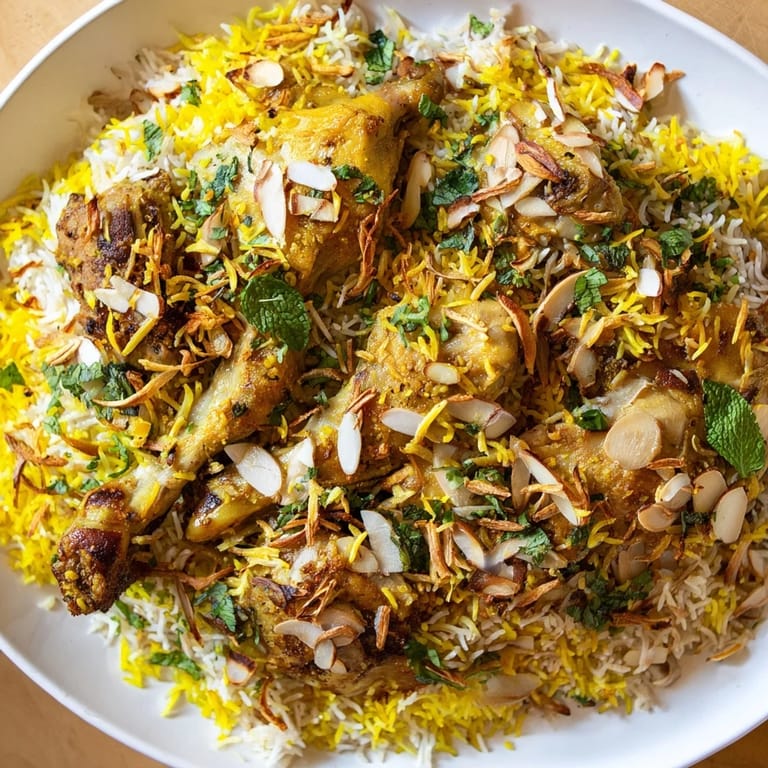
- Remove from the oven and let it sit undisturbed for 10 minutes so the rice continues absorbing residual heat and the flavors settle into stillness. Then gently fluff with a fork, releasing those beautiful aromas one final time, and transfer to a serving platter, crowned with those reserved crispy fried onions.
 Épingler
 My mother once told me that biryani was born out of necessity and love—when you had meat and rice and spices, and you layered them together in a pot sealed tight, magic happened. Watching my own family lean over that fragrant mound of rice, their faces lit by appetite and memory, I finally understood what she meant.
The Art of Caramelizing Onions
Those caramelized onions are not optional flourishes; they're foundational. Medium heat is your friend here—rushing with high heat turns them bitter and crispy instead of sweet and jammy. I once made this mistake and thought my entire batch was ruined until my neighbor suggested I'd simply over-seared them, and the rest of the biryani was fine. From then on, I set a timer for 15 minutes and stay patient, stirring every few minutes, watching them transform from pale to golden to amber. By the end, they taste almost like caramel, which is exactly the point.
Why Basmati Matters
Basmati isn't fancy for its own sake—it's the only rice that truly works here because each grain stays distinct and long. Short-grain or medium-grain rice will turn mushy and clump together, and your biryani becomes a pilaf instead of a celebration. When I was learning, I thought I could swap in jasmine rice to save money, and the result was disappointingly heavy. Now I understand that basmati's delicate structure is what lets the ghee, spices, and saffron milk coat each grain individually, so every spoonful is complex rather than one-note.
Serving and Variations
Biryani is generous and adaptable, though it's best served with a cool, creamy raita or a simple cucumber-yogurt salad to balance the richness. For vegetarian friends, marinated paneer or a mix of tender vegetables (potatoes, peas, carrots, green beans) swapped in for the meat works beautifully—just reduce the braising time since vegetables soften faster than meat. Some cooks add a few drops of rose water to the saffron milk for a subtle floral lift, which is especially lovely if you're serving at a celebration.
- Always have extra ghee on hand—a final drizzle just before serving adds a silky finish.
- If your oven runs hot, check the biryani a few minutes early to prevent over-browning on top.
- Leftover biryani tastes even better the next day, reheated gently covered with foil in a low oven.
 Épingler
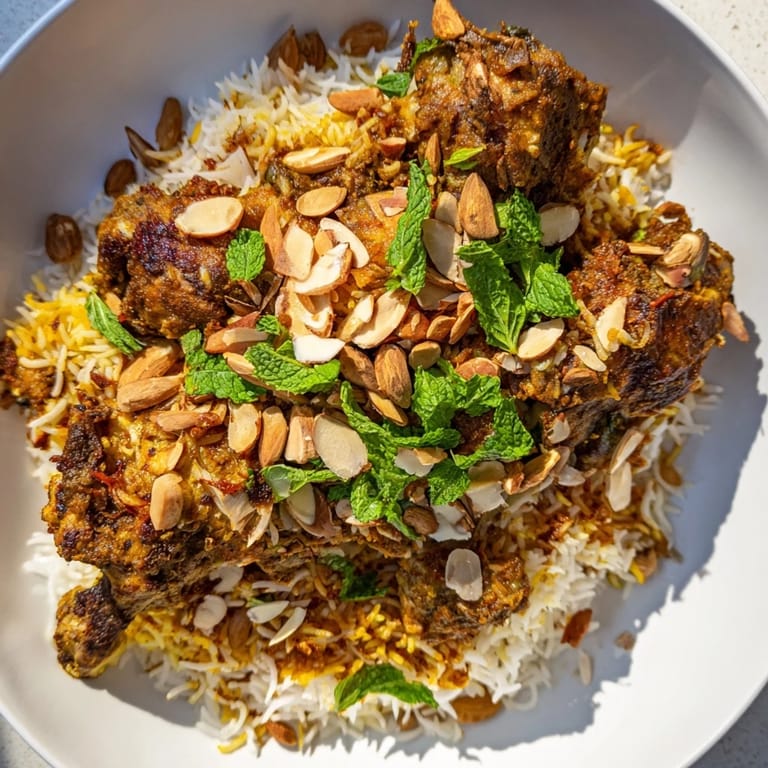
 This biryani is an offering, a moment when rice and meat and spice become something bigger than their parts. Make it for people you want to remember you by.
Questions fréquentes sur la recette
- → Comment parfumer le riz de façon authentique ?
Utilisez des épices entières comme la cardamome, les clous de girofle, la cannelle et la feuille de laurier dans l'eau de cuisson pour infuser le riz de saveurs délicates.
- → Quelle viande choisir pour cette préparation ?
Le poulet avec os ou l'agneau conviennent parfaitement, offrant une texture tendre et une richesse aromatique après marinade.
- → Comment obtenir des oignons bien caramélisés ?
Faites revenir les oignons à feu moyen-doux lentement jusqu'à ce qu'ils deviennent dorés et sucrés, en remuant régulièrement pour éviter qu'ils brûlent.
- → Quelle est l'importance du safran dans ce plat ?
Le safran apporte un goût subtil et une couleur dorée unique qui rehausse le caractère luxueux du riz.
- → Peut-on préparer ce plat à l'avance ?
Oui, il gagne même en saveurs après un repos; conservez-le au frais puis réchauffez doucement pour préserver sa texture.
- → Quelle alternative végétarienne suggérée ?
Le paneer mariné ou un mélange de légumes épicés peuvent remplacer la viande tout en conservant la richesse des saveurs.