 Épingler
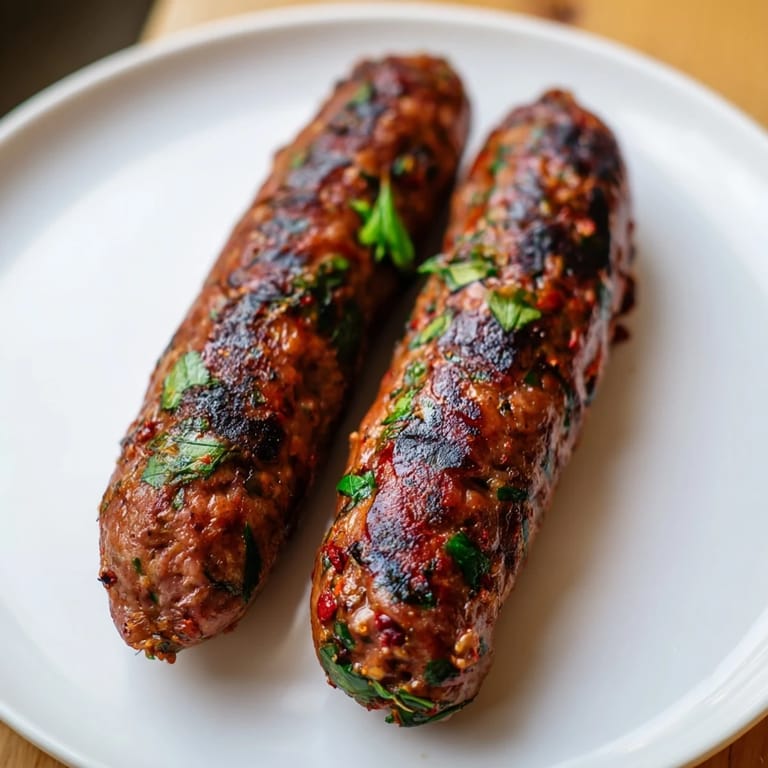
 The first time I made merguez at home, I didn't have casings. Instead of giving up, I shaped the spiced meat into logs and grilled them directly on the pan, and honestly, they tasted just as good as the ones I'd eaten in Tunis years before. There's something about that moment—standing in your kitchen, the smell of harissa and cumin filling the air, realizing you're about to create something that tastes like traveling without leaving home. Merguez isn't just a sausage; it's a gateway to North African flavors, bold and unapologetic, with just the right kick of heat.
I once made a batch for a dinner party where half my guests had never tried merguez before. When they bit into those smoky, spiced sausages and their eyes lit up, I realized I'd just handed them a memory they'd carry forward. That's what good food does—it becomes a moment people remember fondly, and suddenly you're not just feeding people; you're sharing a piece of the world with them.
Ingredients
- Ground beef and lamb (500 g total): The combination of beef and lamb creates depth—beef gives you body, while lamb adds that authentic, slightly gamey note that makes merguez distinctive.
- Harissa paste (2 tbsp): This is your heart and soul; it's what makes merguez taste like itself, so don't skip it or shy away from it.
- Garlic, cumin, coriander, smoked paprika, fennel, caraway, and cayenne: These aren't just flavor companions; they're a conversation between North African traditions, each spice layering onto the next.
- Fresh cilantro and parsley (4 tbsp combined): These herbs brighten everything at the very end, cutting through the richness with a whisper of freshness.
- Cold water (2 tbsp): This small amount binds everything into a sticky, cohesive mass that holds together beautifully when cooked.
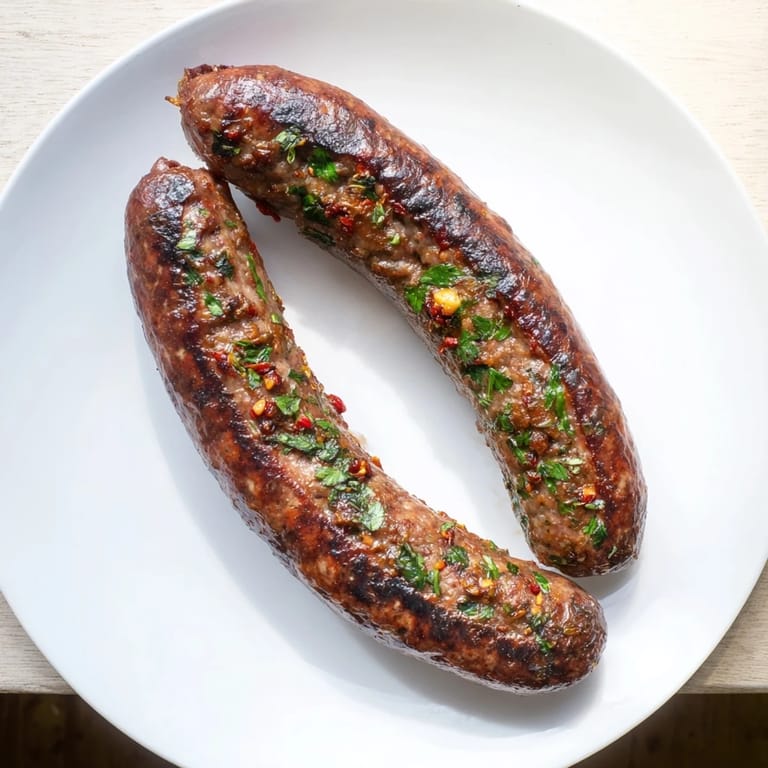
- Sheep sausage casings (optional): If you use them, they'll give you that satisfying snap when you bite in; if not, the sausages will still taste phenomenal.
Tired of Takeout? 🥡
Get 10 meals you can make faster than delivery arrives. Seriously.
One email. No spam. Unsubscribe anytime.
Instructions
- Combine your meats:
- Mix the beef and lamb in a large bowl, breaking up any clumps as you go. You're creating a blank canvas for all the spices that follow.
- Add the spice foundation:
- Stir in the garlic, harissa, cumin, coriander, paprika, fennel, caraway, cayenne, salt, and pepper. Mix thoroughly until the color is even throughout and the aroma fills your kitchen—this is when you'll know it's working.
- Finish with freshness:
- Fold in the cilantro and parsley, then add the cold water a little at a time until the mixture becomes sticky and holds together when you squeeze it. This is crucial; the water acts as a binder that makes everything cohesive.
- Stuff or shape:
- If using casings, soak them first, then carefully fill with a stuffer or piping bag fitted with a wide nozzle, twisting into 5–6 inch links. If skipping casings, shape into sausage-sized logs and refrigerate for 30 minutes to help them firm up and hold their shape.
- Heat your cooking surface:
- Get your grill or grill pan screaming hot over medium-high heat. You want it hot enough that the sausages sizzle the moment they touch down.
- Cook until golden:
- Grill for 8–10 minutes, turning occasionally, until the outside is deeply browned and the inside is cooked through. The sizzle and char are part of the magic here.
- Serve while warm:
- Eat them immediately, whether on their own, in flatbread, over couscous, or with a generous dollop of yogurt sauce on the side.
 Épingler
 There was an afternoon when I grilled merguez for my neighbors, and we ended up sitting on the porch eating them straight off the grill, laughing and talking as the sun went down. That's when I understood that merguez has this gift—it brings people together in the most effortless way, transforming a simple dinner into something worth remembering.
Choosing the Right Casings
If you go the casing route, sheep casings are traditional and create that delicate snap when you bite in. They're thinner than hog casings, which suits the delicate nature of merguez. You can find them in the specialty section of most good butcher shops or online, and they're usually packed in salt. Soak them gently in lukewarm water for at least 30 minutes before using, and handle them with care—they're more fragile than they look, but once you get the feel for them, stuffing becomes almost meditative.
The Casing-Free Approach
Not everyone has access to casings, and honestly, you don't need them. Shape the mixture into logs about the size of your thumb, refrigerate them, and grill them directly—they'll brown beautifully and taste just as authentic. Some people even flatten them into patties and serve them as kefta, which is the Moroccan equivalent. The key is making sure your mixture is sticky enough to hold together, which is why that cold water matters so much.
Serving and Pairing Ideas
Merguez is thrillingly versatile. Nestle them into a warm pita or baguette with pickled onions and a spoonful of harissa mayo, pile them onto couscous with roasted vegetables, or serve them alongside a bright salad and yogurt sauce. They're equally at home on a mezze platter as they are as the main event on someone's dinner plate.
- A minty, cooling yogurt sauce (mixed with fresh mint, lemon juice, and a pinch of salt) is the perfect foil to the sausage's heat.
- Don't skip the flatbread—it's not just a vehicle; it's part of the whole experience, soaking up the juices and char.
- Leftover cooked merguez keeps for three days in the fridge and reheats beautifully on a hot pan, making them perfect for next-day lunches.
 Épingler
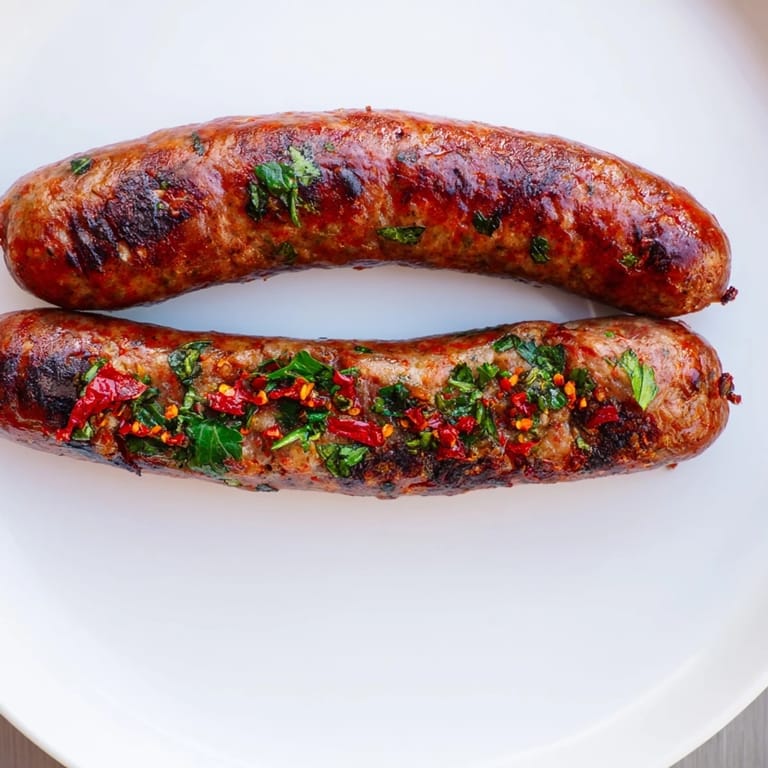
 Making merguez at home transforms your kitchen into a little outpost of North Africa, and the reward is sausages that taste like memory and adventure. Once you've made them once, you'll find yourself making them again and again, each batch tasting like home.
Questions fréquentes sur la recette
- → Quels viandes sont utilisées pour ces merguez ?
Un mélange équilibré de bœuf et d’agneau hachés apporte saveur et texture à ces saucisses.
- → Comment relever la saveur sans trop de piquant ?
Réduisez la quantité de piment de Cayenne ou omettez-le pour une saveur plus douce sans sacrifier l’arôme des épices.
- → Peut-on préparer ces saucisses sans boyau ?
Oui, façonnez-les en boudins ou galettes pour une cuisson et dégustation plus simples.
- → Quelle cuisson privilégier ?
Le grill ou la poêle à feu moyen-vif, en tournant régulièrement, permet une cuisson homogène et un extérieur bien doré.
- → Quelles accompagnements suggérez-vous ?
Ces merguez sont délicieuses avec du couscous, une salade fraîche, du pain pita ou une sauce au yaourt mentholée.