 Épingler
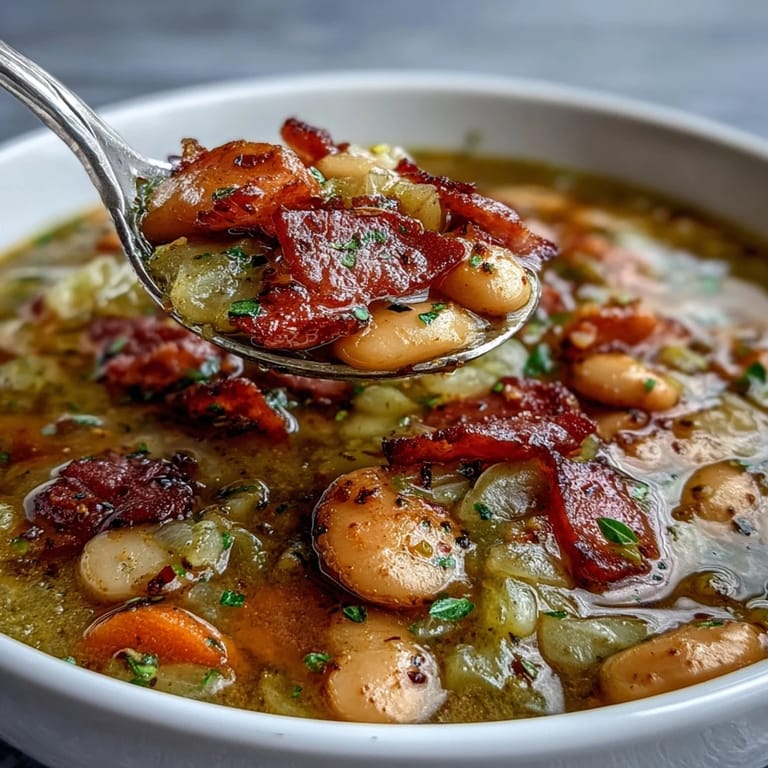
 My grandmother kept a ham bone in her freezer year-round, waiting for the first chilly evening when soup season would begin. One autumn afternoon, I found her at the stove with a pot that seemed to bubble with pure comfort, and she handed me a wooden spoon without a word—just tilted her head toward the stove like I already knew what to do. That soup, thick with creamy lima beans and studded with tender ham, became the dish I reach for whenever the air turns crisp and my kitchen feels too quiet.
I made this for my neighbor when she came home from the hospital with her new baby, and watching her eat it straight from a mug while sitting on her porch felt like witnessing real magic. She called me three weeks later just to say she'd made it again, and her husband asked for seconds—that's when I knew this soup had crossed over from recipe to ritual in someone else's home too.
Ingredients
- Cooked ham, diced (2 cups, about 300 g): The star that gives this soup its smoky soul; buy a good quality ham or save your bone from Sunday dinner and use that instead, which adds even more depth.
- Dried lima beans, soaked overnight and drained (2 cups, about 350 g): Soaking is non-negotiable here—it keeps them from falling apart and gives you that creamy texture that feels almost luxurious.
- Large onion, diced (1): This creates the sweet, mellow base that everything else builds on, so don't rush the cooking of it.
- Medium carrots, diced (2): They add natural sweetness and color, melting into the broth until they're almost invisible but definitely present in flavor.
- Celery stalks, diced (2): The secret ingredient nobody talks about, but it's what makes this taste like home instead of just soup.
- Garlic cloves, minced (3): A quick sizzle in the pan brings out its gentle warmth without overwhelming the dish.
- Low-sodium chicken or vegetable broth (8 cups, 2 liters): Use broth you actually like drinking, because it becomes the soul of the soup—taste it first if possible.
- Bay leaf (1): Just one, tucked in to whisper herbal notes without announcing itself loudly.
- Dried thyme (1 teaspoon): Thyme feels like it was born to live in a pot of beans; it doesn't shout, just gently rounds out everything.
- Black pepper (½ teaspoon): A gentle pinch that you'll adjust at the end anyway, so don't overthink it.
- Salt, to taste: This waits until the very end because beans and ham bring their own saltiness to the party.
- Fresh parsley, chopped (2 tablespoons, optional): A bright, green finishing touch that makes people think you fussed more than you actually did.
Tired of Takeout? 🥡
Get 10 meals you can make faster than delivery arrives. Seriously.
One email. No spam. Unsubscribe anytime.
Instructions
- Prepare your beans with patience:
- Rinse the soaked lima beans under cool water, feeling them slip through your fingers to make sure you've gotten rid of any debris or wrinkled ones that didn't plump up overnight. Fresh beans are crucial here because they'll cook evenly and become that perfect creamy texture.
- Build the flavor foundation:
- Pour a splash of oil into your large pot and let it shimmer over medium heat, then add your diced onion, carrots, and celery together—you'll hear them start to sizzle and soften within minutes. Watch for when the onion turns translucent and the whole mixture smells sweet and alive, which should take about 5 minutes.
- Wake up the garlic:
- Stir in your minced garlic and let it cook for just 1 minute, stirring constantly so it doesn't stick or brown—you want it fragrant and gentle, not bitter. This single minute transforms everything that came before it into something with real depth.
- Bring everything together:
- Add your diced ham, those drained lima beans, the broth, bay leaf, thyme, and black pepper all at once, then turn up the heat and let it come to a rolling boil. You'll see the surface bubble and shift as the beans begin their transformation.
- Let time do the work:
- Once it boils, reduce the heat to low and let it simmer gently and uncovered for 1 hour and 15 minutes, stirring occasionally so nothing sticks to the bottom. The soup will gradually thicken as the beans break down and release their starch, and the kitchen will smell like nostalgia itself.
- Fish out the bay leaf and taste:
- Carefully remove that bay leaf, then take a spoonful and taste—this is your moment to add salt if needed, keeping in mind that the ham and broth already carry their own seasoning. Adjust to your preference, because only you know how you like it.
- Serve with warmth:
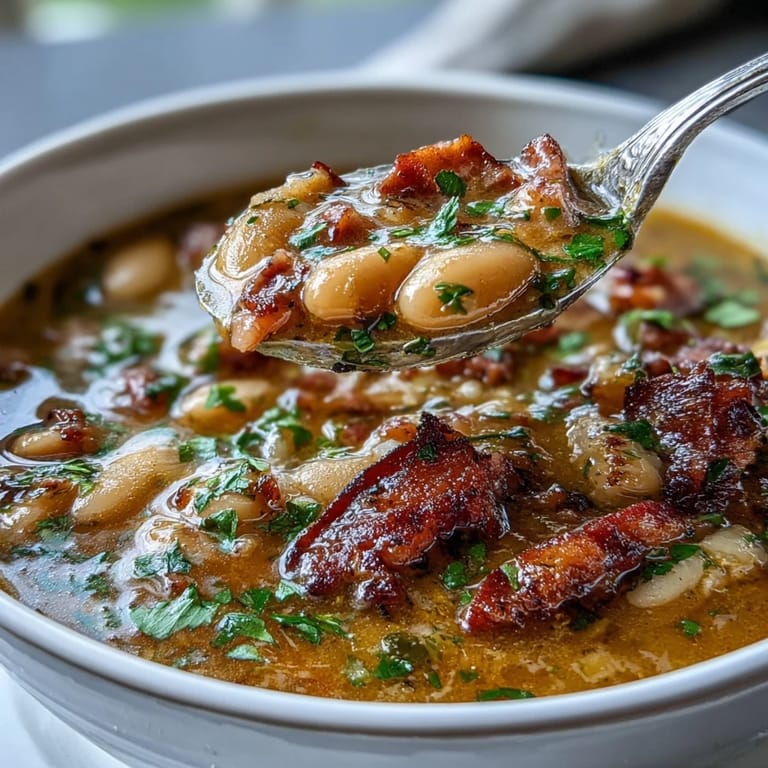
- Ladle the soup into bowls and scatter fresh parsley over top if you have it, then serve it hot with something crusty beside it. Watching someone taste this for the first time, seeing their face relax, is its own kind of reward.
 Épingler
 There was an evening when my daughter came home from college, exhausted and homesick, and I had this soup warming on the stove because something in me just knew. She sat at the kitchen table without talking, and when she finished that first bowl, she asked for another, and then everything she'd been holding in started to spill out—the good and the hard and the confusing. That's when I understood that some dishes aren't really about food at all.
The Magic of Overnight Soaking
When you soak beans overnight, you're not just saving time—you're actually making them more digestible and helping them cook evenly so every single bean reaches that perfect creamy stage at the same moment. I used to think overnight soaking was fussy until I tasted the difference, and now I plan soup around my beans instead of rushing them.
When to Trust Your Taste Buds
The most important adjustment happens at the very end, after that bay leaf comes out and the soup has simmered into itself. Take a spoonful, let it cool for a second, and taste with an open mind—you might find the ham is salty enough and you need very little extra, or you might need a good pinch; there's no one right answer because every ham, every broth, every kitchen is different.
Variations Worth Trying
This soup is forgiving enough to welcome changes, and sometimes the best versions happen by accident or necessity. A few years ago I made it vegetarian by leaving out the ham and adding smoked paprika instead, and my friend who's been vegetarian for years said it was the first time she'd ever felt like she wasn't eating a substitute version of something else.
- Smoked turkey swapped in for ham brings a lighter, brighter flavor that some people prefer, especially if you want the soup to feel less heavy.
- A splash of apple cider vinegar or lemon juice at the end brightens everything and makes people ask what you did differently.
- Fresh thyme from your garden tastes incomparably better than dried if you have it, so swap in about 1 tablespoon and don't look back.
 Épingler
 This soup has taught me that real cooking is about showing up and paying attention, not about being perfect. Every time someone asks for the recipe, I feel a little grateful that something so simple can carry so much care.
Questions fréquentes sur la recette
- → Comment préparer les haricots lima avant la cuisson ?
Les haricots lima doivent être trempés une nuit dans de l'eau froide, puis bien rincés et égouttés avant la cuisson pour garantir une texture tendre.
- → Peut-on remplacer le jambon par une autre viande ?
Oui, la dinde fumée est un excellent substitut pour une saveur plus légère tout en conservant le caractère fumé.
- → Quelle est la meilleure façon de servir ce plat ?
Il est conseillé de servir chaud, accompagné de pain croustillant ou de pain de maïs pour une expérience complète.
- → Comment garantir la couleur et la saveur des légumes ?
Faire revenir les légumes coupés en dés dans un peu d'huile jusqu'à ce qu'ils soient légèrement fondants avant d'ajouter les autres ingrédients permet de développer les saveurs.
- → Peut-on réaliser ce plat en version végétarienne ?
Oui, en retirant le jambon et en ajoutant du paprika fumé, on obtient une alternative savoureuse et riche en arômes.