 Épingler
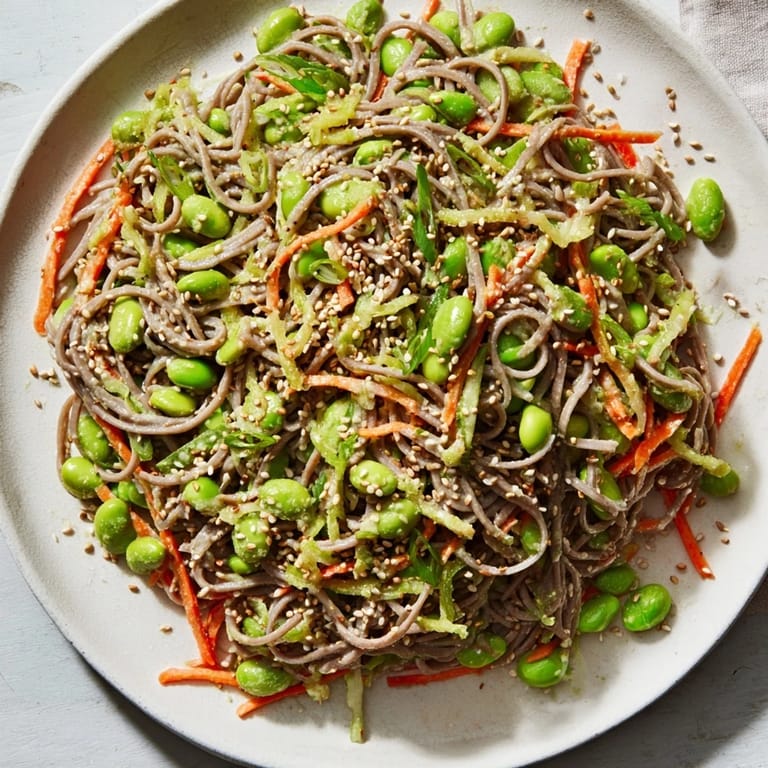
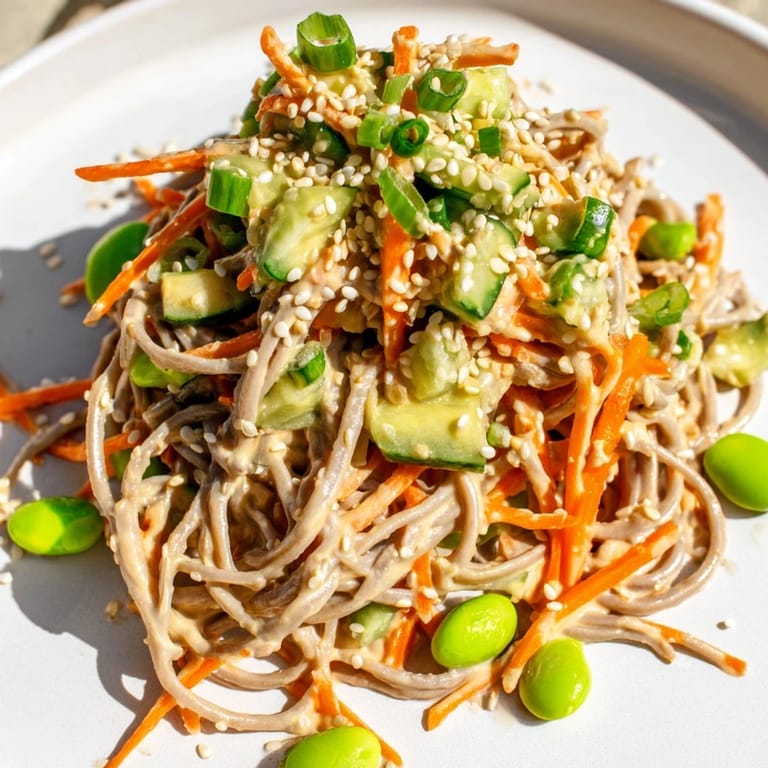
 I discovered this salad on a sweltering afternoon when my fridge felt emptier than my appetite. There were noodles waiting, a bag of edamame, and some vegetables that needed rescuing. I threw together a tahini-based dressing on instinct, tossed everything together, and suddenly had something so bright and satisfying that it became my summer staple. The balance of nutty sesame against crisp vegetables felt almost accidental, but it stuck around.
I made this for a potluck once where half the guests were vegan and the other half couldn't eat wheat. Instead of stressing, I realized this dish just works for everyone—no substitutions needed, no awkward explanations. People came back for seconds without realizing they were eating something 'designed' for dietary restrictions.
Ingredients
- Soba noodles or thin spaghetti (250 g): Soba has an earthy depth that transforms this dish, though regular pasta works fine if that's what you have.
- Cucumber (1 medium, julienned): Julienne it thin so it drinks in the dressing without becoming waterlogged.
- Carrots (2 medium, julienned): Raw carrots stay snappy and sweet, brightening every forkful.
- Shelled edamame (1 cup, cooked and cooled): These little protein powerhouses add texture and earthiness you actually notice.
- Spring onions (2, thinly sliced): Add them right before serving so their sharpness doesn't fade into the background.
- Toasted sesame seeds (2 tbsp): Toast them yourself if possible—the difference between raw and toasted is the difference between bland and magical.
- Tahini or toasted sesame paste (3 tbsp): This is the soul of the dressing, so choose quality tahini that tastes like sesame, not like sadness.
- Soy sauce (2 tbsp): Use tamari if you need gluten-free, and don't skip it thinking salt can substitute.
- Rice vinegar (1 tbsp): It's delicate enough to blend without overpowering, unlike harsher vinegars.
- Toasted sesame oil (1 tbsp): A little goes a long way—this stuff is potent and worth every drop.
- Honey or maple syrup (1 tbsp): This softens the saltiness and ties the whole dressing together.
- Fresh ginger (1 tsp, grated): Grate it fresh right over the bowl so you capture those volatile oils.
- Garlic (1 clove, minced): One clove is enough; more than that and you're making a different salad entirely.
- Water (2-3 tbsp): Add this slowly while whisking so your dressing becomes silky, not split.
Tired of Takeout? 🥡
Get 10 meals you can make faster than delivery arrives. Seriously.
One email. No spam. Unsubscribe anytime.
Instructions
- Bring water to a rolling boil:
- Fill your pot generously and let it heat while you prep vegetables. You need enough water that the noodles can move freely as they cook.
- Cook the noodles until tender:
- Follow the package timing but taste a strand a minute early—you want them cooked through but still with a gentle chew, not mushy. The moment they're done, drain and run cold water over them, tossing gently until they're completely cool to the touch.
- Whisk the dressing into being:
- Start with tahini and soy sauce, watching as they first resist and then surrender into a paste. Add rice vinegar and sesame oil next, then honey, ginger, and garlic. The mixture will look thick and stubborn until you start adding water, one tablespoon at a time, whisking between each addition. You're looking for something that coats a spoon but still pours smoothly.
- Combine everything in a large bowl:
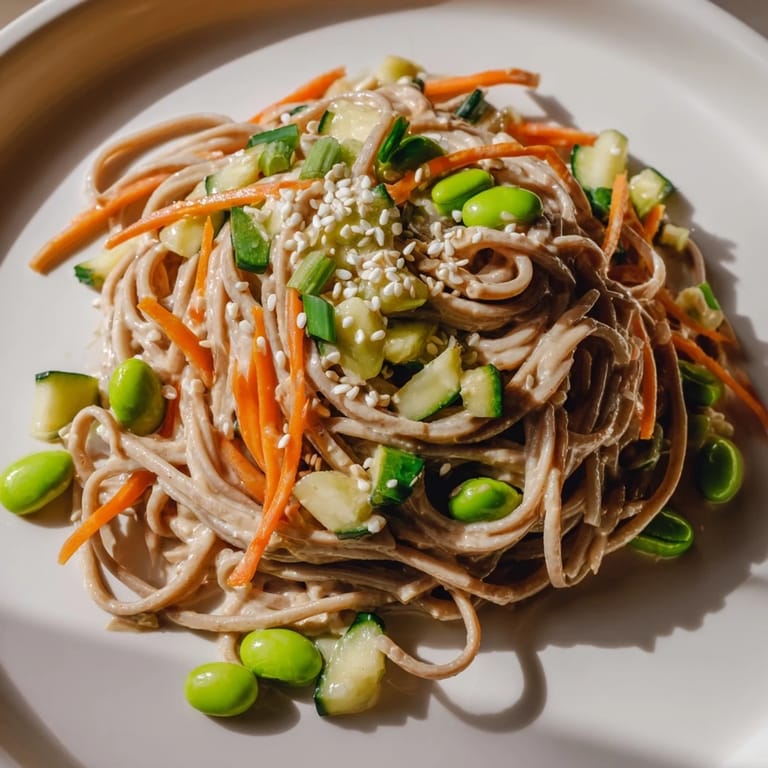
- Add your cooled noodles to the dressing first, coating them gently but thoroughly. Then fold in the cucumber, carrots, and edamame, being careful not to crush anything. This isn't the time to be rough.
- Finish with the bright stuff:
- Scatter spring onions and toasted sesame seeds across the top right before serving so they stay crisp and pronounced.
- Chill before tasting:
- At least ten minutes in the fridge lets the flavors settle and the noodles to absorb a little more dressing. This step genuinely makes a difference.
 Épingler
 My partner once asked why I made this salad so often, and I realized it wasn't about nutrition or convenience. It was about that moment when you taste it cold, when the sesame hits first and then the ginger, when you crunch through cucumber and feel genuinely satisfied. That's when food becomes less about eating and more about feeling taken care of.
The Magic of Sesame
Sesame is one of those ingredients that tastes completely different depending on how you use it. Raw sesame is subtle and almost shy, but toasted sesame—whether as seeds or oil—becomes bold and almost nutty. I learned this by accident once when I grabbed untoasted sesame oil and wondered why the dressing tasted flat. Now I always check the label and seek out the toasted version. It's the single biggest flavor boost you can make in this recipe.
Vegetables That Won't Wilt
The trick to keeping vegetables crisp in a cold salad is cutting them thin and leaving the dressing time to chill separately before combining. I've made this mistake before—mixing everything hot and wondering why my cucumber turned to mush by dinner. Now I give the vegetables a light toss with the cold dressing just before serving, reserving a little extra to dress them again if they sit for more than an hour. It's a small step that changes everything.
Making It Your Own
This salad is forgiving in the best way. I've added shredded chicken, crispy tofu, thinly sliced radishes, and even fresh mint when I had it on hand. The structure is solid enough to handle additions without falling apart. One version I made with cashew crumbles instead of peanuts became my default, though that's entirely a preference thing.
- Roasted chickpeas make a great plant-based protein that adds crunch instead of replacing it.
- A drizzle of sriracha or chili oil on the side lets people control their own heat level.
- Lime wedges are essential—a squeeze right before eating lifts everything brighter.
 Épingler
 This salad has become my answer to 'what should we bring' because it travels well and tastes just as good at room temperature as it does cold. It's the kind of dish that makes you feel like you've actually cooked something, even though it asks almost nothing of you.
Questions fréquentes sur la recette
- → Quels types de nouilles peut-on utiliser ?
Les nouilles soba ou spaghetti fins conviennent parfaitement, et pour une version sans gluten, privilégiez les nouilles de riz.
- → Comment obtenir une sauce au sésame bien onctueuse ?
Le mélange de tahini, huile de sésame grillé, miel et eau permet d'obtenir une sauce lisse et douce qui enrobe bien les nouilles.
- → Quelles garnitures ajoutent du croquant ?
Les graines de sésame toastées, les cacahuètes ou noix de cajou concassées apportent une belle texture croquante.
- → Peut-on varier les protéines ?
Oui, l'edamame est une excellente source végétale, mais vous pouvez ajouter du tofu grillé ou du poulet pour plus de richesse.
- → Comment servir cette salade ?
Elle se déguste froide, idéale en entrée ou accompagnement léger, et se conserve bien quelques heures au frais pour intensifier les saveurs.