 Épingler
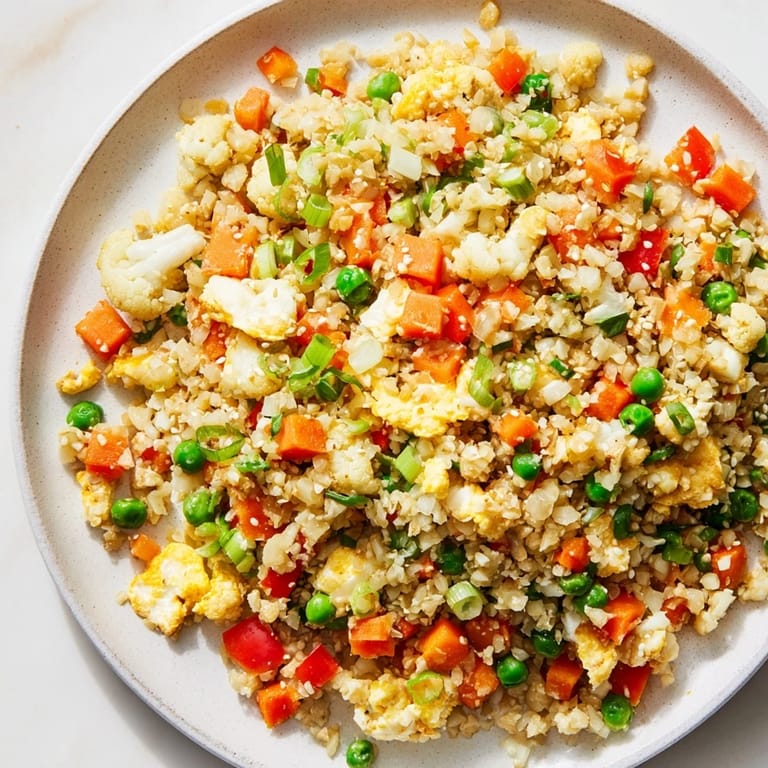
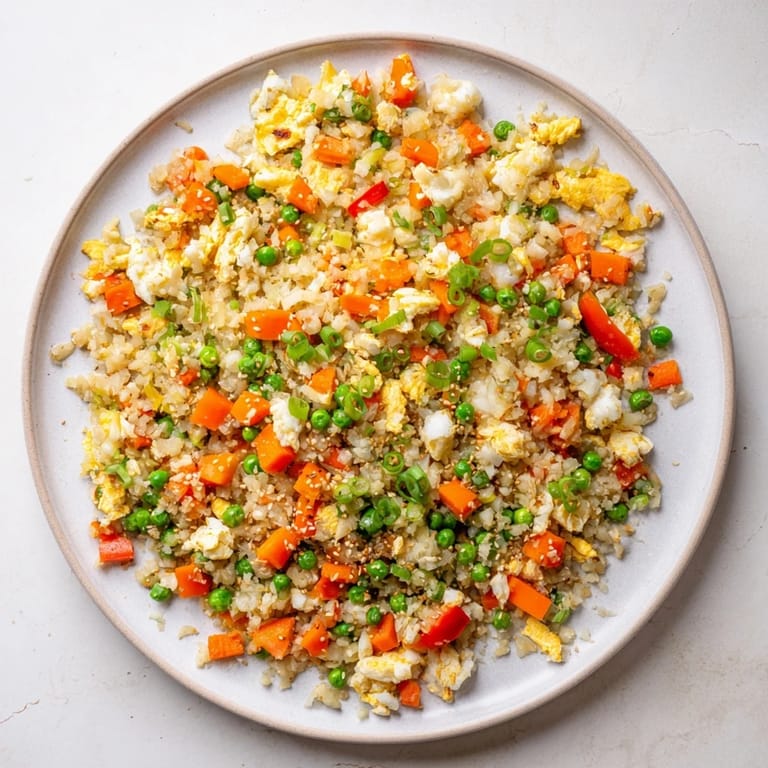
 There's a moment that happens in every kitchen when you realize you've been overthinking things. Mine came on a Tuesday afternoon when I was staring at a head of cauliflower, wondering if I could turn it into something that didn't taste like punishment for my carb-counting goals. A friend had just mentioned she'd given up rice, and instead of sympathizing, I got curious. Twenty minutes later, I had something golden, fragrant, and honestly addictive—and nobody at the table missed the grains for a second.
I made this for my sister during one of her visits, and she texted about it for weeks afterward. She'd been skeptical at first—cauliflower as rice sounded like a compromise she didn't want to make. But watching her go back for thirds, talking with her mouth full about how light it felt but still felt like actual food, reminded me that the best recipes are the ones that don't announce what they're missing.
Ingredients
- Cauliflower, 1 medium head: The star that earned its place; pulsing it creates a texture that soaks up flavor instead of just sitting there.
- Carrot and bell pepper: These add sweetness and color—they're also forgiving if your knife skills are approximate.
- Frozen peas: Keep them frozen until the last moment; they stay bright and crisp instead of turning into sad little marbles.
- Green onions and fresh ginger: These two make the dish feel alive and intentional rather than like you threw things together.
- Sesame oil, divided: Use it in two doses: some for cooking (so it doesn't burn), a finishing drizzle for that unmistakable aroma.
- Soy sauce or tamari: Two tablespoons is my sweet spot—enough to deepen everything without making it salty.
- Eggs: They add richness and protein; scramble them separately so they stay tender and don't get overworked.
Tired of Takeout? 🥡
Get 10 meals you can make faster than delivery arrives. Seriously.
One email. No spam. Unsubscribe anytime.
Instructions
- Rice the cauliflower:
- Rinse your florets and pat them completely dry—moisture is the enemy here. Pulse in a food processor until it looks like grain-sized pieces, working in batches so you don't end up with cauliflower mush.
- Scramble the eggs:
- Heat a tablespoon of oil until it shimmers, then pour in lightly beaten eggs. Let them sit for a few seconds before stirring, and pull them off the heat while they're still a touch underdone; they'll keep cooking from residual heat. Set them aside on a plate.
- Build the aromatics:
- Add the remaining oil, then immediately add minced garlic and ginger. You want to catch that thirty-second window where they become fragrant instead of burnt—your nose will tell you when it's right.
- Cook the vegetables:
- Toss in carrots, bell pepper, and frozen peas, stirring occasionally for two to three minutes. You're looking for tender but with a slight snap; overcooked vegetables turn this dish boring.
- Finish the cauliflower:
- Add your riced cauliflower and stir frequently for about five minutes. It should be soft enough to eat but not so soft it falls apart, and any moisture should evaporate so it's light and fluffy.
- Bring it together:
- Stir in soy sauce, pepper, and salt, then return the eggs and scatter green onions over everything. One more toss to warm through, then finish with a drizzle of toasted sesame oil if you have it—this is where the magic happens.
 Épingler
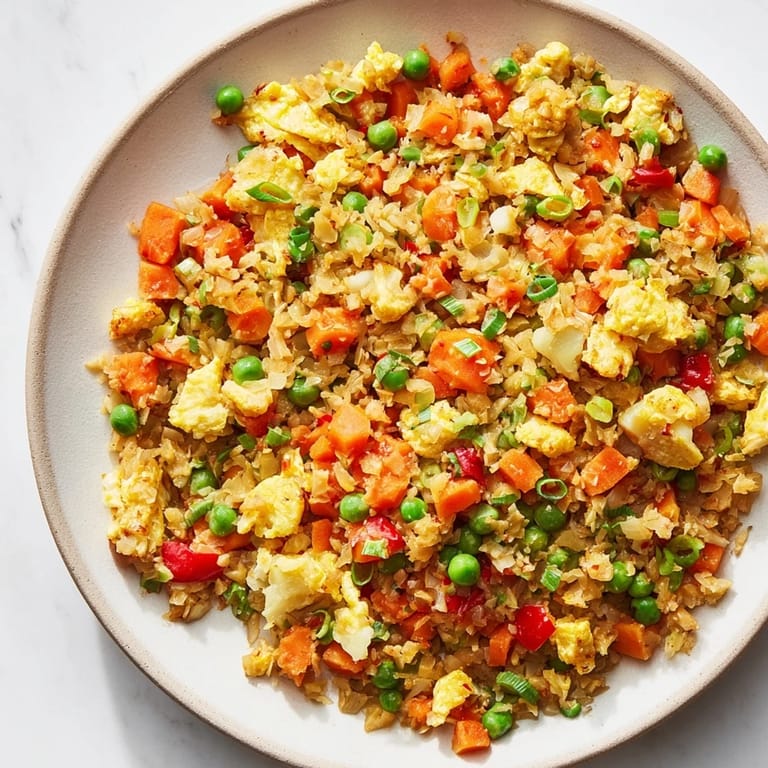
 The real turning point came when I realized this wasn't a "healthy substitute" pretending to be something else—it was its own thing, delicious and complete on its own terms. That shift in how I thought about the dish changed everything about how I made it and shared it.
The Cauliflower Question
People always ask if you can really use cauliflower as a rice replacement, and the answer is yes, but with a caveat: it's different, and that difference is exactly the point. It's lighter, it cooks faster, and it lets the other flavors shine through without the heaviness that comes with grain. The first time you make this, approach it as an adventure rather than a substitution, and you'll understand why it converts skeptics into regulars.
Timing and Temperature
Medium-high heat is crucial here—too low and your vegetables steam, too high and your aromatics burn. Once you get the pan hot enough that oil shimmers immediately, you're in the sweet spot. The entire cooking process should take about ten minutes from start to finish, which means prep is where the real work lives; mise en place isn't just fancy French, it's the difference between a smooth cook and a panicked scramble.
Variations and Company
This dish is endlessly adaptable, which is part of what makes it so comforting to cook. Swap in whatever vegetables you have on hand—broccoli, snap peas, corn, even mushrooms work beautifully. Add protein by stirring in cooked chicken, shrimp, or crumbled tofu during the final toss. For serving, a squeeze of lime and fresh cilantro brighten everything, and if you want a crispy element, top with a handful of toasted sesame seeds or cashews.
- Vegan version: Skip the eggs or use a tofu scramble blended with turmeric for color and earthiness.
- Extra umami: A splash of rice vinegar or fish sauce (if not vegetarian) adds depth that soy sauce alone can't reach.
- Make-ahead tip: You can rice the cauliflower and prep vegetables up to a day ahead; store them separately so nothing gets soggy.
 Épingler
 This recipe became a regular in my kitchen rotation not because it was virtuous, but because it was genuinely good—and that's the highest compliment a dish can earn. Make it once, and it'll probably become yours too.
Questions fréquentes sur la recette
- → Comment préparer le chou-fleur pour cette préparation ?
Il faut râper ou passer le chou-fleur au robot jusqu'à obtenir une texture fine ressemblant à du riz avant de le faire sauter.
- → Peut-on remplacer les œufs pour une version vegan ?
Oui, vous pouvez omettre les œufs ou les substituer par un brouillé de tofu pour conserver une source de protéines.
- → Quels légumes conviennent le mieux à ce plat ?
Carottes, petits pois, poivrons rouges et oignons verts fonctionnent très bien, mais vous pouvez ajouter brocoli, pois mange-tout ou maïs.
- → Quel type d'huile est conseillé pour la cuisson ?
Une huile neutre ou de sésame est recommandée pour sa saveur et son point de fumée adapté à la cuisson rapide.
- → Comment apporter plus de protéines au plat ?
Ajoutez du poulet cuit, des crevettes ou du tofu pour enrichir la préparation en protéines.
- → Quelle est la meilleure façon d'assaisonner ce plat ?
Utilisez de la sauce soja ou tamari, du poivre et une touche d'huile de sésame toastée pour une saveur équilibrée.