 Épingler
 There's something almost magical about the moment when hot broth hits couscous—that whisper of steam rising from the pot, carrying the perfume of cinnamon and cumin into your kitchen. I discovered this particular version while standing in a cramped spice market, overwhelmed by the sheer abundance of it all, and struck up a conversation with a vendor who casually mentioned that the secret wasn't the recipe itself, but giving the spices time to bloom in hot oil before anything else touched the pan. That one observation changed how I approached couscous forever.
I made this couscous for a dinner party on an unexpectedly cold October evening, and I remember my friend leaning over the pot, eyes closing as she inhaled the steam, and saying it smelled like traveling. That comment stuck with me—not because it was poetic, but because it captured exactly what this dish does: it transports you without requiring a passport.
Ingredients
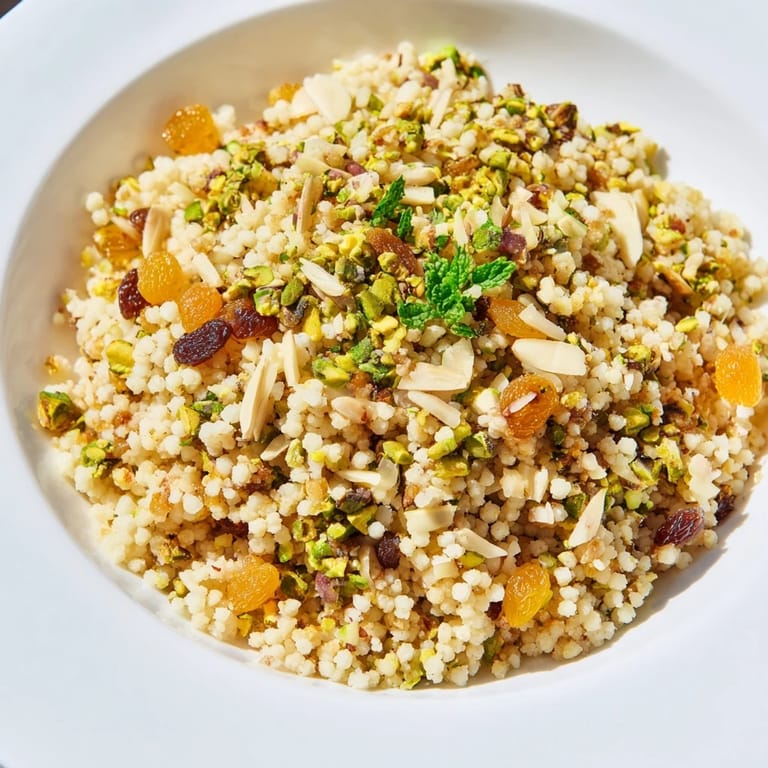
- Couscous: Use regular couscous, not the pearl variety, so it absorbs the broth evenly and stays light rather than gummy.
- Vegetable broth: The quality of your broth matters more than you'd think; it's the foundation of flavor, so use one you'd actually taste on its own.
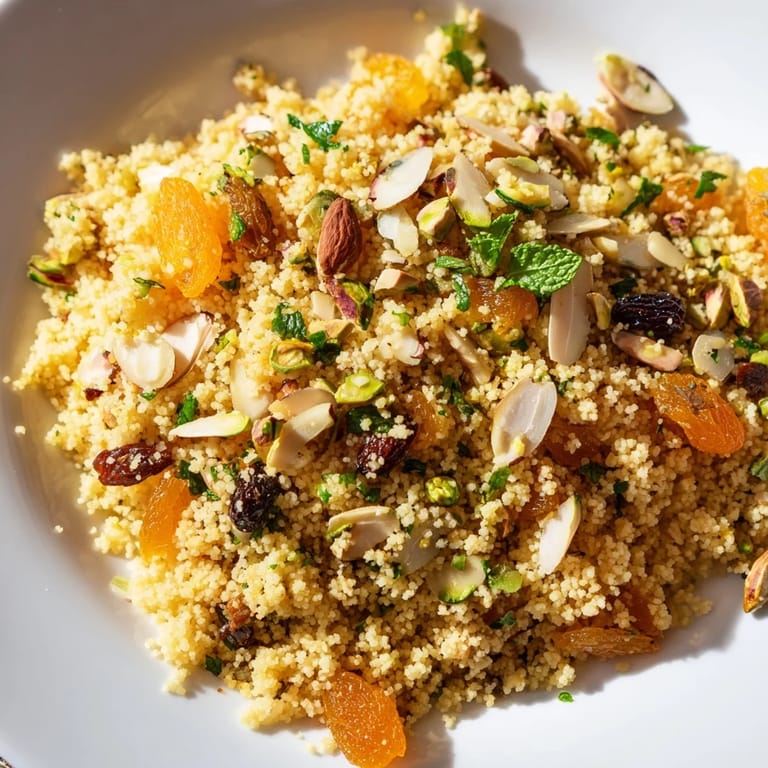
- Dried apricots and golden raisins: These burst slightly in the heat and add pockets of natural sweetness that balance the spices.
- Toasted almonds and pistachios: Toast them yourself if you can; the difference in flavor and fragrance is worth the extra two minutes.
- Olive oil: Good olive oil, nothing fancy, but something you genuinely like the taste of.
- Onion and garlic: Don't skip the blooming step with these—it's what turns the spices from flat to singing.
- Ground cumin, cinnamon, coriander, and turmeric: These warm spices are the soul of the dish; if yours have been sitting unopened for over a year, they've likely lost their spark.
- Fresh parsley and mint: The mint is optional, but I've never regretted adding it; it brightens everything it touches.
- Lemon wedges: Serve these alongside so people can squeeze their own—it makes the dish feel more alive.
Tired of Takeout? 🥡
Get 10 meals you can make faster than delivery arrives. Seriously.
One email. No spam. Unsubscribe anytime.
Instructions
- Blooming the aromatics:
- Heat your olive oil over medium heat and let the onion soften for a few minutes, watching it turn translucent at the edges. Once the garlic goes in, you'll have maybe a minute before it starts to brown, so stay present.
- Releasing the spice magic:
- Add all your spices at once and stir constantly for just thirty seconds—this is where the transformation happens, and you'll actually smell the difference as the spices warm through. Don't skip this step or rush it.
- Bringing the fruit into the fold:
- Scatter the dried apricots and raisins into the spiced oil and stir to coat them thoroughly, making sure they're getting equal exposure to the heat.
- Building the liquid base:
- Pour in your broth and let it come to a rolling boil; you want things to sound lively in that pot.
- Introducing the couscous:
- Remove from heat, stir in the couscous quickly but gently, cover with a lid, and then resist the urge to peek for five minutes. This waiting period is where the magic actually happens.
- Fluffing and folding:
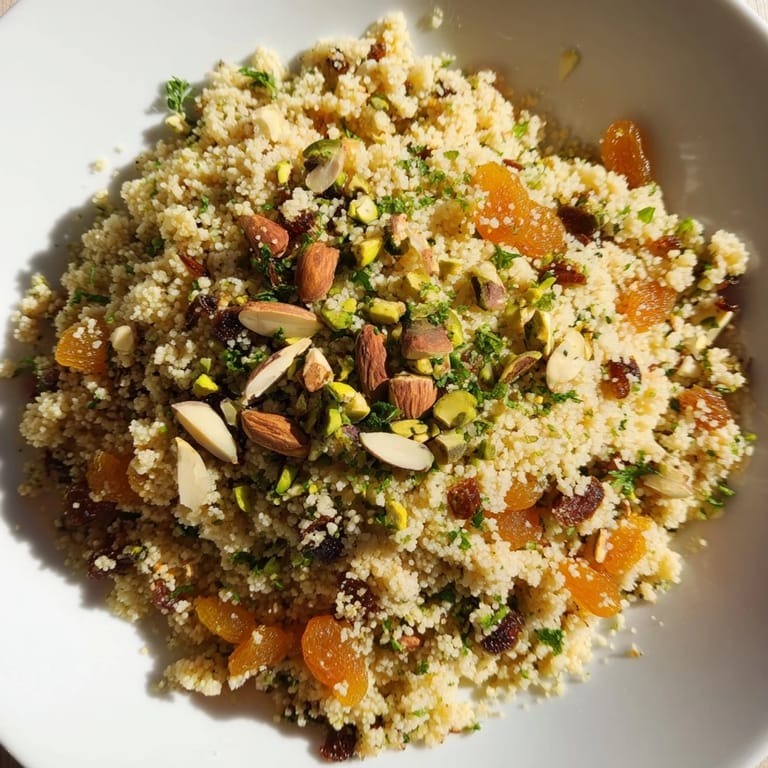
- Use a fork to break up any clumps, then gently fold in the nuts and fresh herbs so everything is distributed evenly without crushing the couscous.
- Tasting and finishing:
- Season to taste, remembering that lemon juice will arrive at the table, and serve while the whole dish is still warm.
 Épingler
 The turning point for me came when a friend's eight-year-old asked for seconds and then thirds, which sounds like a small thing until you realize that this child eats almost nothing with spices. Watching that happen made me understand that couscous pilaf isn't about complexity for its own sake—it's about balance, and about respecting both the spices and the people eating them.
When to Serve This Dish
This couscous feels equally at home on a summer table alongside grilled vegetables as it does warming up a winter dinner with roasted chicken or lamb. It's forgiving enough to make on a Tuesday night when you're tired but want something that looks intentional, and elegant enough that nobody would question it appearing on a table with guests.
Making It Your Own
The beauty of this recipe is that it's genuinely flexible without losing its identity. I've made it with dates instead of raisins when that's what I had on hand, and with cashews when almonds weren't available, and both versions were delicious. The frame of warm spices and fluffy couscous stays solid; everything else is negotiable.
The Spice Conversation
Ground spices are living things in the kitchen, and they fade over time no matter how carefully you store them. If your cumin smells dusty or your cinnamon doesn't make you pause when you open the jar, it's time for fresh. This isn't about snobbery; it's just about getting the best version of what you're making.
- Buy spices from places where they turn over stock quickly, which usually means specialty markets rather than the back shelf of your supermarket.
- Label everything with the date you opened it so you're not guessing six months later whether it's still worth using.
- If you're making this regularly, buy whole spices and toast and grind them yourself, though ground spices work beautifully and save time on busy nights.
 Épingler
 This couscous has become my answer to the question of what to bring to potlucks where I want to contribute something that feels thoughtful without being complicated. It's a quiet dish that speaks for itself.
Questions fréquentes sur la recette
- → Comment réussir la cuisson du couscous pilaf ?
Chauffer le bouillon, puis le verser sur le couscous en couvrant la casserole. Laisser reposer 5 minutes avant de décoller les grains à la fourchette pour une texture légère.
- → Quels fruits secs utiliser pour ce plat ?
Les abricots secs, raisins dorés et sultanas apportent une douce saveur sucrée qui se marie parfaitement aux épices et aux noix toastées.
- → Peut-on varier les noix dans cette préparation ?
Oui, les amandes effilées et pistaches apportent croquant et richesse, mais on peut aussi utiliser noix de cajou ou noisettes selon les préférences.
- → Quelles épices sont indispensables ici ?
Le cumin, la cannelle, la coriandre et le curcuma équilibrent le plat avec des notes chaudes et parfumées très caractéristiques.
- → Comment servir ce couscous pour une touche finale ?
Ajouter un filet de jus de citron frais et parsemer d’herbes fraîches comme la menthe et le persil pour relever les saveurs en douceur.