 Épingler
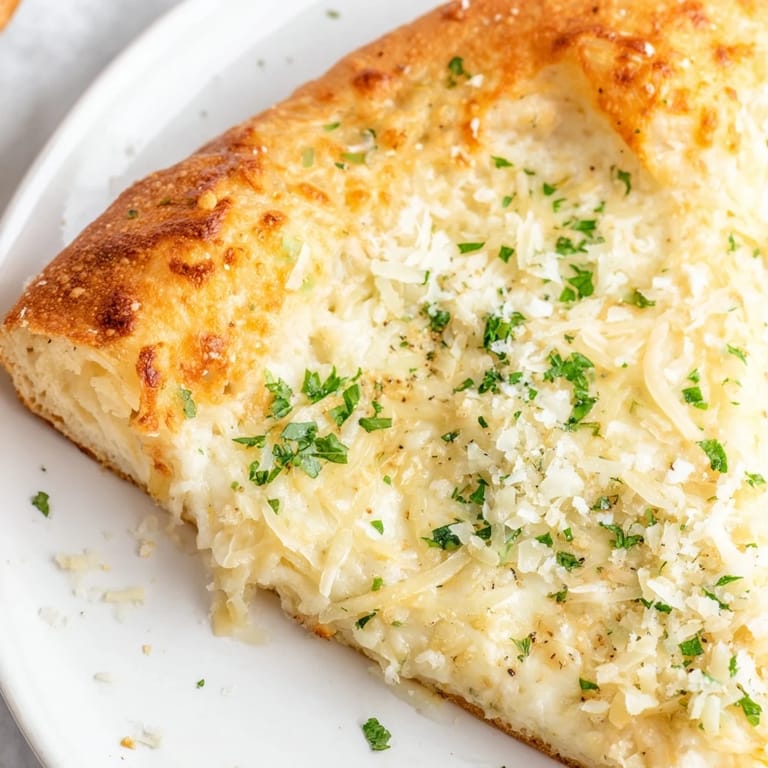
 On a quiet Tuesday evening, my roommate came home from work looking absolutely exhausted, and I found myself reaching for flour and butter without thinking. There's something about creamy white pizza that feels less like cooking and more like wrapping someone in comfort. The garlic cream sauce came together in minutes, turning my tiny kitchen into a cloud of buttery, garlicky steam that seemed to fix everything about that day. By the time we pulled it from the oven, golden and bubbling, we'd forgotten we were even hungry—we were just mesmerized by how simple perfection could be.
I made this for my sister's book club crowd, and I wasn't expecting much—white pizza feels almost too delicate for a crowd. But watching everyone go back for thirds, still talking about it weeks later, taught me that sometimes the simplest ideas are the ones that stick with people. The garlic cream sauce has a way of making everyone slow down and actually taste what they're eating instead of just inhaling it.
Ingredients
- Fresh pizza dough, 1 pound: Use store-bought to save time, or make your own if you want that homemade feeling; either way, let it come to room temperature so it doesn't fight you when you stretch it.
- Unsalted butter, 2 tablespoons: This is the foundation of your sauce, so don't skimp or substitute—real butter gives the cream that glossy, luxurious texture.
- Garlic cloves, 4 finely minced: Fresh garlic is non-negotiable here; the fragrance when it hits hot butter is the moment you know you're on the right track.
- All-purpose flour, 2 tablespoons: This thickens your sauce and keeps it from being watery, so don't skip it even if you're tempted to go straight to cream.
- Whole milk, 1 cup: The milk-to-cream ratio keeps things rich without being overwhelming; too much cream and your sauce becomes heavy, too little and it breaks.
- Heavy cream, 1/4 cup: This is what makes it taste like restaurant pizza; it adds that velvety mouthfeel you can't fake.
- Parmesan cheese, 1/4 cup plus 2 tablespoons: The aged bite of Parmesan cuts through the cream beautifully and keeps the sauce from tasting one-note.
- Shredded mozzarella cheese, 2 cups: Use whole milk mozzarella if you can find it; it melts with more character than low-moisture varieties.
- Fresh parsley, 1 tablespoon chopped: A small sprinkle at the end adds color and a fresh whisper of flavor that makes people wonder what your secret is.
- Olive oil for brushing: This is what turns the crust edge into something golden and irresistible, so don't brush it with water instead.
- Salt and black pepper: Season as you go, not just at the end; tasting the sauce while you make it prevents bland surprises.
Tired of Takeout? 🥡
Get 10 meals you can make faster than delivery arrives. Seriously.
One email. No spam. Unsubscribe anytime.
Instructions
- Heat your oven and stone like you mean it:
- Get your pizza stone or baking sheet into a 475°F oven at least 10 minutes before you're ready to bake; a cold surface is the enemy of a crispy crust. If you don't have a stone, a sturdy baking sheet works just fine, but the stone really does make a difference in how golden everything gets.
- Stretch your dough into submission:
- On a lightly floured surface, roll or stretch your dough into a 12-inch circle, working gently so you don't deflate all those tiny air bubbles that make pizza dough wonderful. Transfer it to parchment paper so you can slide it onto the hot stone without losing your nerve.
- Build your garlic cream sauce:
- Melt butter over medium heat and add your garlic, watching it carefully until the kitchen smells like something you'd want to bottle and wear. Stir in flour and cook for a full minute to cook out that raw flour taste, then slowly whisk in the milk and cream while stirring constantly to avoid lumps.
- Season and finish the sauce:
- Once your sauce is thick enough to coat the back of a spoon, add salt and pepper, then remove it from heat and stir in the Parmesan until it's completely smooth and glossy. Taste it now and adjust seasoning if needed; this is your moment to make sure it's perfect before it goes on the pizza.
- Spread the sauce like you're frosting a cake:
- Pour the warm garlic cream onto your dough and spread it evenly, leaving about a half-inch border around the edge so the crust can puff and crisp up. The sauce should cover generously but not be so thick that it drowns the dough.
- Layer your cheese with purpose:
- Sprinkle the shredded mozzarella evenly across the sauce, then top with the extra Parmesan for a golden, crispy finish. Don't be shy with the cheese; you want bubbling and browning, not bare spots.
- Brush the crust for golden glory:
- Take a pastry brush or crumpled paper towel and lightly coat that exposed dough border with olive oil; this is what separates a homemade pizza from one that tastes like it came from a box.
- Bake until everything is melted and gorgeous:
- Slide your pizza onto the hot stone and bake for 12–15 minutes, watching after the 10-minute mark so you catch it at that perfect moment when the crust is golden and the cheese is bubbling with little brown spots. The exact time depends on your oven's mood, so use your eyes, not just the timer.
- Rest and finish:
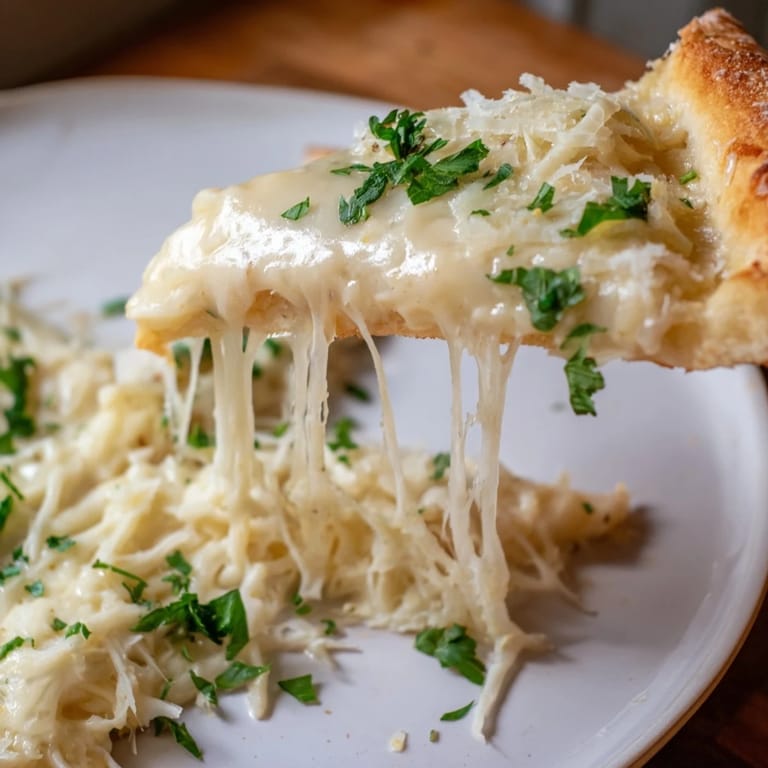
- Let it cool for just a minute so you don't burn the roof of your mouth, then slice and serve while it's still hot and the cheese is still pulling in those long, satisfying strings. A scatter of fresh parsley is optional but makes people think you're fancier than you actually are.
 Épingler
 There's a moment right when you pull white pizza from the oven—that second when the house fills with the smell of melted mozzarella and garlic—where everything feels intentional and warm. My grandmother used to say that food made with cream tastes like someone cares, and I think she was onto something.
Why This Sauce Works
The magic of a proper béchamel-based sauce is that it doesn't separate or split the way cream alone might; the flour acts as a glue, holding everything together in silky harmony. Once you understand this ratio—butter, flour, milk, cream—you can build infinite variations without fear. I've added everything from truffle oil to fresh herbs, and the sauce always holds strong because the foundation is sound.
Crust Matters More Than You Think
A lot of people get caught up in the sauce and cheese, but the crust is doing all the real work here; it's what keeps your pizza from feeling soggy or heavy. That olive oil brush isn't decoration—it's the difference between a crust that shatters gently under your teeth and one that's pale and limp. The preheated stone or sheet is equally crucial because it starts cooking the bottom immediately, giving you that crispy contrast to all the creamy toppings.
Variations That Make Sense
Once you've made this base version and it feels natural, small additions will start calling to you from your pantry. The cream sauce is neutral enough to carry fresh spinach, caramelized onions, roasted mushrooms, or even some prosciutto if you're feeling less vegetarian. Red pepper flakes scattered on top before baking add a whisper of heat that wakes up all those rich, soft flavors without overpowering them.
- Spinach or mushrooms should be sautéed first to remove excess moisture, or they'll make your pizza soggy.
- If you add any savory toppings, taste the sauce before spreading and hold back slightly on the salt so nothing ends up over-seasoned.
- A squeeze of fresh lemon juice over the finished pizza brightens everything and makes people taste the garlic more clearly than they expected.
 Épingler
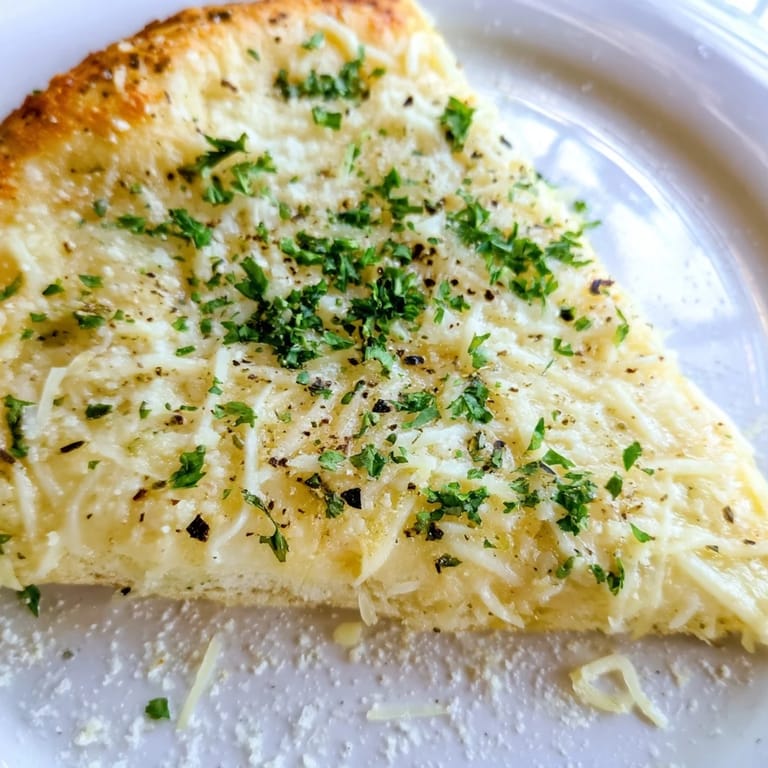
 White pizza is the kind of dish that makes people happy without fanfare, and that's exactly the point. It asks for a few good ingredients and a little attention, then rewards you with something that tastes like restaurant-level care without the pretense.
Questions fréquentes sur la recette
- → Comment obtenir une pâte bien croustillante ?
Préchauffez le four avec une pierre à pizza ou une plaque à haute température, étalez la pâte finement et badigeonnez légèrement d'huile d'olive avant cuisson.
- → Puis-je préparer la sauce à l’ail à l'avance ?
Oui, la sauce peut être préparée et conservée au frais jusqu'à 2 jours avant d’être étalée sur la pâte.
- → Quels fromages utiliser pour plus de gourmandise ?
La mozzarella est idéale pour sa texture fondante; ajoutez un peu de parmesan râpé pour renforcer la saveur et apporter une légère touche salée.
- → Comment varier les garnitures tout en gardant l’équilibre ?
Essayez des épinards frais, des champignons sautés ou des oignons caramélisés pour des couches de saveurs complémentaires.
- → Quel vin accompagner avec cette pizza blanche ?
Un vin blanc sec et léger, comme un Pinot Grigio, équilibre parfaitement la richesse de la crème et le fromage.