 Épingler
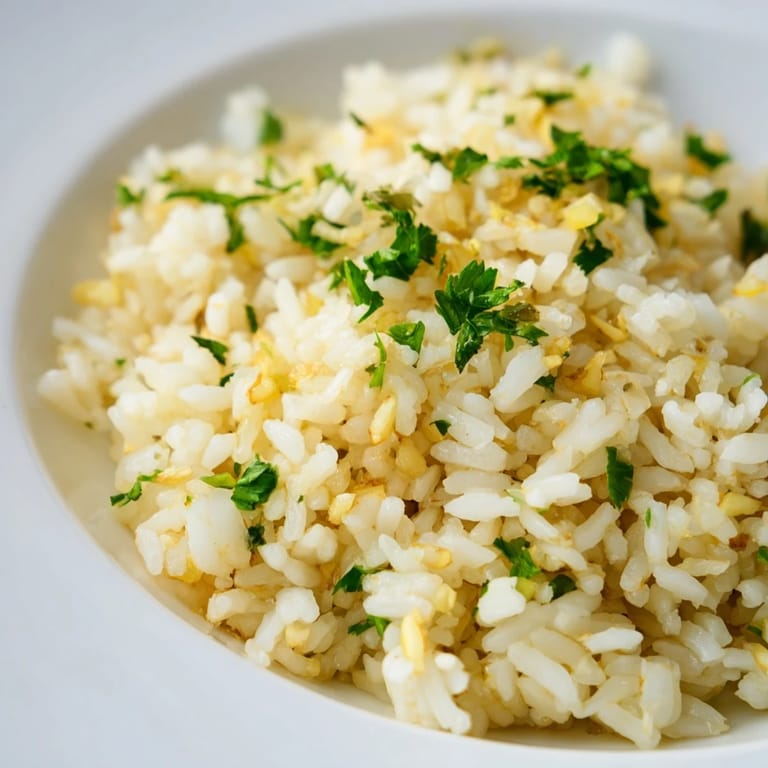
 There's something about the smell of garlic hitting hot oil that stops me mid-conversation. I discovered this jasmine rice dish almost by accident one evening, when I had a friend coming over and realized I'd left most of my pantry bare. What I did have was jasmine rice, a few garlic cloves, and oil—so I decided to treat the rice like it deserved more attention than just boiling water. The moment I tasted it, I understood why this simple approach shows up in kitchens across Asia, passed down quietly between cooks who know that sometimes restraint and fragrance say more than complexity ever could.
I made this rice for my partner's family dinner once, nervous because cooking for an audience always made me second-guess myself. My mother-in-law watched me toast the garlic and asked quietly, 'Do you let it brown?'—which made me realize I was already overthinking it. When we sat down to eat, nobody said much about the rice itself, but I noticed everyone's bowls emptied faster than the stir-fry did. That's when I learned that humble food done with attention doesn't need fanfare.
Ingredients
- Jasmine rice: Look for long, slender grains with a faint floral aroma—it's what makes this rice different, and it's worth seeking out because it genuinely tastes better than standard white rice.
- Water: The ratio here is forgiving, but measure it carefully the first time so you understand what 'just absorbed' feels like.
- Fine sea salt: Don't skip this; it wakes up the garlic and jasmine without making anything taste salty.
- Neutral oil: Canola, vegetable, or light olive oil works—stay away from aggressive flavors that would fight the garlic.
- Garlic cloves: Mince them finely and evenly so they cook at the same pace and release their sweetness, not their harshness.
- Fresh cilantro or scallions: Optional, but they add a brightness that transforms the dish from side to something you'd eat on its own.
Tired of Takeout? 🥡
Get 10 meals you can make faster than delivery arrives. Seriously.
One email. No spam. Unsubscribe anytime.
Instructions
- Rinse the rice gently:
- Hold the rice under cold running water and move it with your fingers until the water goes from cloudy to clear—this removes excess starch and lets the rice stay fluffy instead of clumping. It takes only a minute and makes a real difference.
- Toast the garlic slowly:
- Pour oil into your saucepan and let it warm over medium-low heat, then add the minced garlic. The low heat is crucial; garlic burns fast and tastes bitter, but toasted gently it becomes sweet and almost nutty. Listen for a gentle sizzle, not an aggressive one.
- Coat the rice in garlic oil:
- Add your drained rice to the pan and stir constantly for about a minute—you're not cooking it yet, just making sure every grain gets coated in that golden, fragrant oil.
- Add water and salt, then boil:
- Pour in the water, add salt, and stir once to break up any clumps. Bring everything to a boil over medium heat, which usually takes 2–3 minutes.
- Cover and simmer gently:
- Once it boils, turn the heat down low and cover the pot with a tight-fitting lid—this traps steam and cooks the rice evenly. Set a timer for 12–15 minutes and don't peek; every time you lift the lid, steam escapes and you lose control of the cooking.
- Rest the rice before serving:
- Turn off the heat and leave the pot covered for 5 minutes; the residual warmth finishes cooking any grains that are still slightly firm and lets everything relax.
- Fluff and garnish:
- Use a fork to gently separate the grains—pressing down with a spoon breaks them. If you're adding cilantro or scallions, scatter them on just before serving so they stay bright.
 Épingler
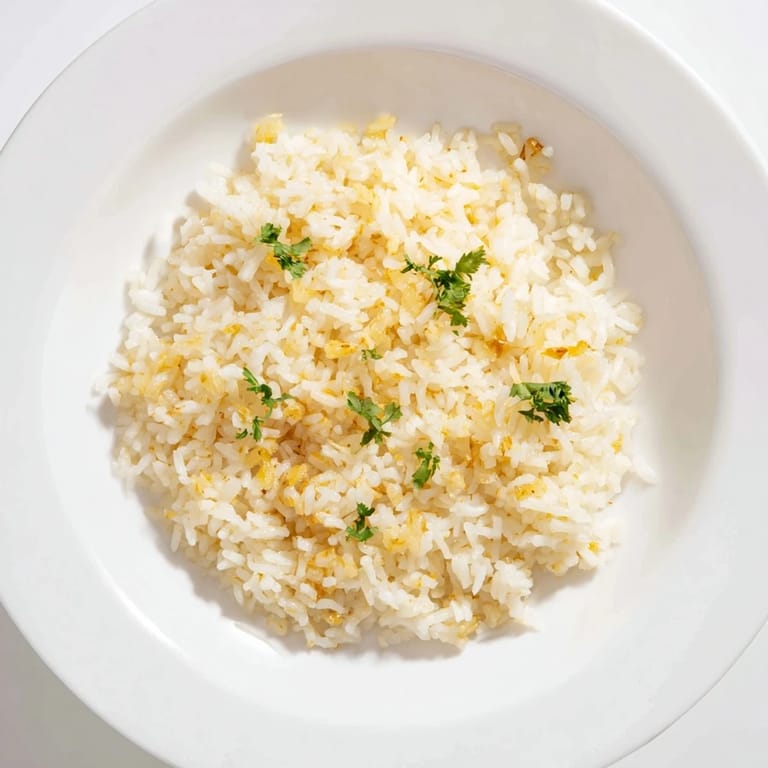
 I once made this rice for a quiet Sunday dinner when nothing else felt right, and somehow that one bowl of fragrant, buttery jasmine rice was exactly what I needed. Food doesn't always have to be complicated to matter—sometimes it just needs to be made with a little care and enjoyed slowly.
Variations et améliorations
Once you've made this rice once or twice and understand how it works, you can play with it. Try stirring in a splash of soy sauce after fluffing for a savory shift, or add white pepper for warmth—but do this gently and taste as you go, because the original magic is in how quiet and clean it feels. Some cooks swear by butter mixed with the oil, which adds a richness that makes the rice feel almost creamy even though it's not.
Quand utiliser ce riz
This rice is a quiet performer—it never tries to steal the show from what it's served alongside. I've paired it with stir-fried vegetables, grilled fish with a light sauce, even simple roasted chicken, and it always felt like exactly the right choice. It also works beautifully next to curries or as part of a rice bowl where it lets other flavors shine.
Conseils de cuisine et astuces
The beauty of this recipe is that it teaches you something every time you make it—how your stove heats, how your lid fits, what 'fragrant' actually smells like. Once you understand the basics, you can adjust for a smaller or larger crowd without second-guessing yourself.
- If you're cooking for two instead of four, halve the recipe exactly—the ratio of rice to water stays the same.
- Save the leftover rice for fried rice the next day; it actually works better when it's had time to dry out slightly.
- Keep tasting the rice in the last minute of cooking so you catch it at that perfect moment when the water is just absorbed.
 Épingler
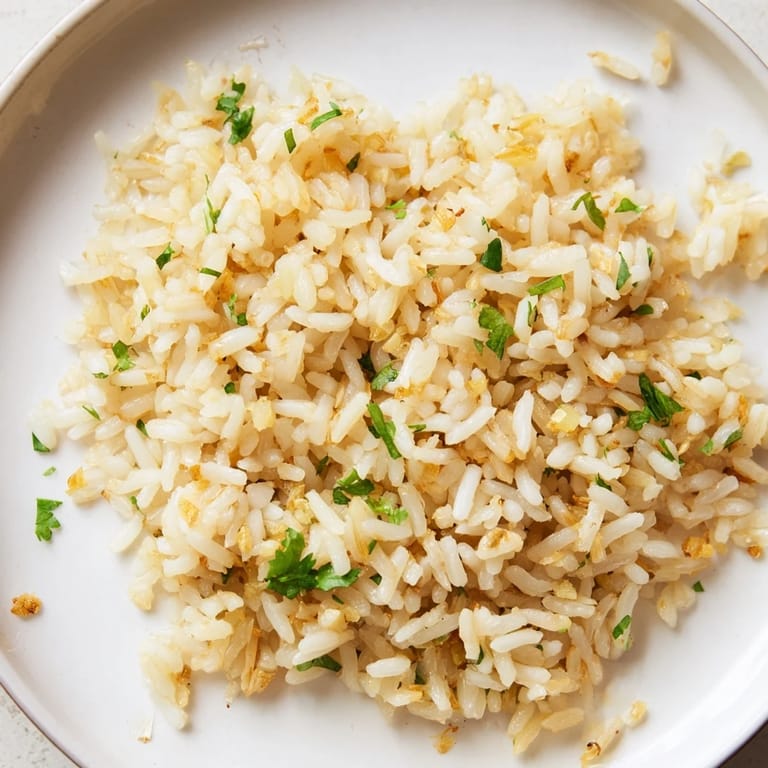
 This rice reminds me that the simplest dishes often contain the most important lessons. Once you know how to make it, you'll make it again and again, and each time you'll do it a little better than before.
Questions fréquentes sur la recette
- → Comment obtenir un riz jasmin bien cuit et moelleux ?
Rincer le riz jusqu'à ce que l'eau soit claire permet d'éliminer l'excès d'amidon, ce qui aide à obtenir une texture aérée. Cuire à feu doux avec un couvercle fermé permet une absorption uniforme du liquide.
- → Pourquoi ne pas laisser l'ail brunir pendant la cuisson ?
L'ail doré mais non brun conserve ses arômes délicats sans développer d'amertume, ce qui parfume subtilement le riz.
- → Peut-on utiliser une autre huile que l'huile neutre ?
Oui, une huile légère telle que colza ou tournesol convient mieux afin de ne pas masquer le parfum de l'ail.
- → Comment varier la saveur de ce plat ?
Ajouter une pointe de poivre blanc, un peu de sauce soja ou garnir avec coriandre fraîche apporte une dimension supplémentaire.
- → Avec quels plats accompagner ce riz parfumé ?
Il accompagne parfaitement les sauté asiatiques, viandes grillées ou alternatives végétales pour un repas équilibré.