 Épingler
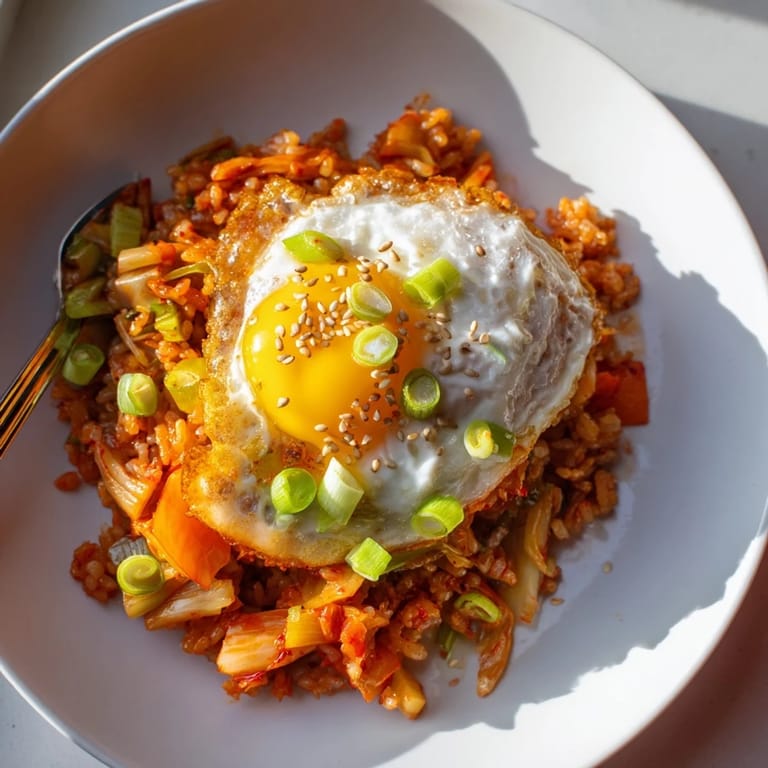
 I discovered kimchi fried rice on a Tuesday night when my fridge held little more than leftover rice and a jar of kimchi my neighbor had gifted me weeks earlier. Too tired to order takeout, I threw everything into a hot wok and watched it transform into something so vibrant and alive that I couldn't believe I'd almost let that kimchi go to waste. The kitchen filled with this incredible spicy-tangy aroma, and suddenly I understood why this dish appears on tables across Korea—it's bold, it's forgiving, and it tastes like you've been cooking for hours when you've really just spent fifteen minutes.
I made this for my roommate on a particularly rough day, and watching their face light up when they tasted it reminded me that food can be medicine in ways that have nothing to do with vitamins. We sat there eating straight from the bowl, passing it back and forth, and not a single word about what was bothering them—just two people quietly satisfied by something warm and real.
Ingredients
- Cooked short-grain rice (2 cups, preferably day-old): Day-old rice is your secret weapon—it separates into individual grains instead of clumping, which is what makes fried rice actually fried and not steamed rice in a bowl.
- Napa cabbage kimchi, chopped (1 cup, plus 2 tbsp kimchi juice): Choose a kimchi that's been fermenting long enough to have real funk and flavor; the juice is liquid gold for seasoning, so don't pour it down the sink.
- Yellow onion, finely chopped (½ cup): The sweetness balances the spice and fermentation, so don't skip this even if you think onions are boring.
- Carrot, diced (½ cup): It adds subtle sweetness and texture; cut it small so it actually cooks through in the short time you have it in the pan.
- Green onions, sliced (2 stalks, white and green parts separated): Keeping them separate means the white parts cook down and sweeten while the green stays bright and fresh on top.
- Gochujang, Korean chili paste (1 tbsp): This is the flavor foundation—it's not just spicy but fermented and complex, which is why no regular hot sauce can replace it.
- Soy sauce (1 tbsp): It adds umami depth and a salty anchor that ties everything together.
- Toasted sesame oil (1 tsp): A small amount goes a long way; this oil is potent and aromatic, and adding it at the end preserves its flavor.
- Sugar (½ tsp): A tiny pinch softens the intensity of the gochujang and kimchi without making anything sweet.
- Freshly ground black pepper (⅛ tsp): Freshly ground tastes sharper and brighter than pre-ground, which matters when your ingredient list is this short.
- Vegetable oil (2 tbsp): Use something neutral and high-heat tolerant; this isn't the place for olive oil.
- Toasted sesame seeds (1 tsp): They add nuttiness and texture, plus they look beautiful scattered on top.
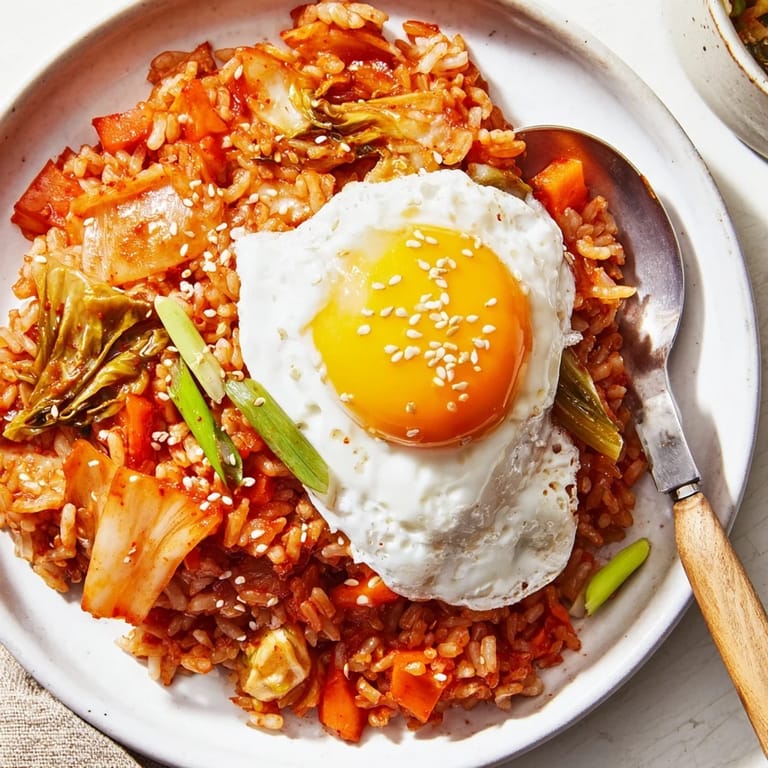
- Fried eggs (2, optional): These aren't just a topping—they're a textural contrast and add richness that makes the whole dish feel more substantial.
Tired of Takeout? 🥡
Get 10 meals you can make faster than delivery arrives. Seriously.
One email. No spam. Unsubscribe anytime.
Instructions
- Get your mise en place ready:
- Chop everything before you start cooking because once the heat is on, this moves fast. Keeping the white and green parts of the green onion separate makes plating feel intentional instead of accidental.
- Build flavor in the aromatics:
- Heat that first tablespoon of oil until it shimmers, then add onion, carrot, and white green onion parts. You want them softened but still slightly firm—about 2 to 3 minutes of steady sautéing brings out their sweetness.
- Introduce the kimchi:
- Add your chopped kimchi and let it kiss the hot pan for 2 to 3 minutes; you'll notice the edges starting to caramelize and the whole kitchen smelling absolutely impossible to resist. This is where the magic starts.
- Make your flavor paste:
- Stir in gochujang, soy sauce, kimchi juice, sugar, and pepper all at once, coating everything in a glossy, spiced mixture. One minute of stirring here distributes the flavors evenly instead of clumping everything in one spot.
- Bring the rice into the party:
- Add your rice and break up any clumps with your spatula—be a little aggressive here. Stir-fry for 3 to 4 minutes until every grain gets coated and warmed through, which is when you know you're close to done.
- Finish with brightness:
- Drizzle sesame oil over everything and scatter the green parts of your green onion across the top. A final stir brings it all together and carries that toasted sesame aroma through every bite.
- Add eggs if you're feeling it:
- If you want fried eggs, heat your remaining oil in a separate pan and fry them to your liking while the rice finishes. A runny yolk breaking into warm fried rice is something everyone should experience.
- Plate and celebrate:
- Divide into bowls, crown each with a fried egg if you're using one, and scatter sesame seeds on top like you mean it.
 Épingler
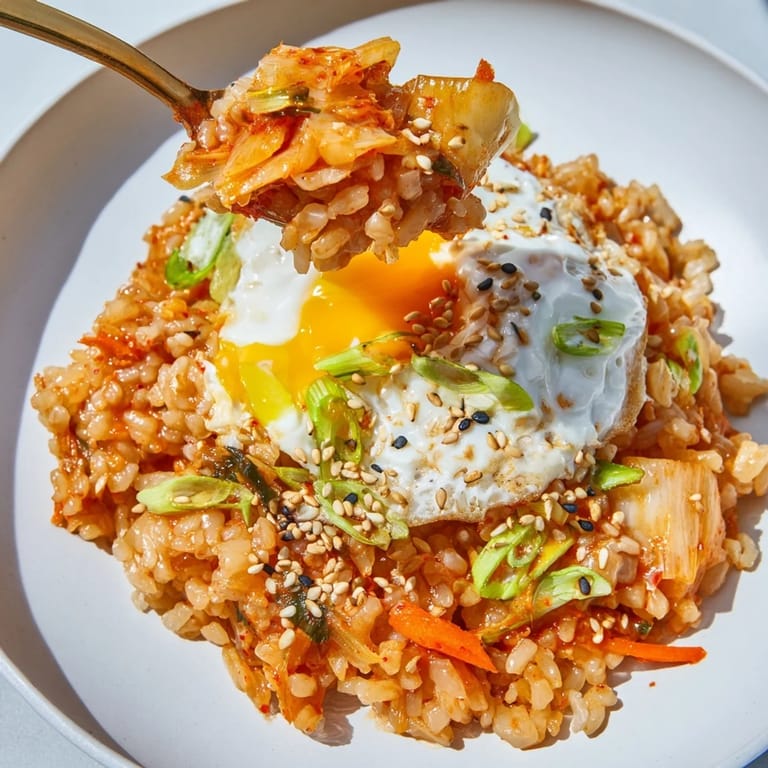
 My favorite version happened when I added a fried egg and let the yolk break across the top, mixing golden richness into every forkful. That moment when warmth meets richness, when fermented funk meets a crispy rice edge, feels like discovering a new favorite meal instead of just reheating leftovers.
The Science of Fried Rice
Fried rice works because you're creating thousands of little surfaces for oil and sauce to coat. Day-old rice has already lost its moisture, so each grain stays separate instead of clumping together like freshly cooked rice does. The high heat of the wok or skillet browns those surfaces slightly, creating texture and depth. Every ingredient goes in at a different time so nothing gets overcooked or lost in the crowd—onions first, then kimchi, then rice, then the delicate green onion parts last. This isn't random; it's a rhythm that makes everything taste better.
Customizing Your Bowl
I've made this recipe dozens of times, and it's different every time depending on what I'm in the mood for or what's sitting in my fridge. Add diced tofu if you want more texture and protein staying vegetarian, or throw in leftover cooked chicken or shrimp if you want something heartier. Brown rice gives you a nuttier, earthier flavor, though it needs a few more minutes to cook through. Some nights I add a splash more kimchi juice because I want everything spicier; other nights I dial the gochujang back because I'm cooking for someone who prefers gentler heat. The foundation stays the same, but the variations are endless.
Serving and Pairing
This dish tastes best when it's piping hot and eaten straight from the bowl—let it cool even slightly and some of the magic fades. Pair it with cold barley tea for something traditionally Korean, or crack open a crisp lager if you want beer; the cold beverage cuts through the spice and fermented funk beautifully. Serve it as a complete meal on its own, or alongside a simple vegetable side like blanched bok choy or cucumber salad to keep things light.
- Eat it immediately while the rice is still hot and the textures contrast sharply.
- A crispy fried egg on top transforms this from a side dish into a restaurant-worthy main course.
- Leftovers reheat perfectly in a hot wok with a splash of water, though fresh is always better.
 Épingler
 This is the kind of recipe that makes you feel like a better cook than you actually are, which might be the highest compliment a weeknight meal can receive. Keep a jar of kimchi and some gochujang in your pantry, and you're always 25 minutes away from something that tastes like you've been cooking all day.
Questions fréquentes sur la recette
- → Comment choisir le riz idéal pour ce plat ?
Privilégiez un riz à grains courts cuit la veille, il offre une texture parfaite pour un sauté homogène sans devenir trop collant.
- → Peut-on ajuster le niveau d'épices ?
Oui, en modulant la quantité de gochujang et de jus de kimchi, on peut adoucir ou relever le goût selon ses préférences.
- → Quels légumes conviennent le mieux ?
Les oignons, carottes et parties blanches de l'oignon vert apportent douceur et croquant indispensables à l'équilibre du plat.
- → Comment rehausser la texture et la saveur ?
Un filet d'huile de sésame toasté et quelques graines de sésame ajoutent un parfum riche et une touche croustillante.
- → Est-il possible de varier les protéines ?
Oui, vous pouvez incorporer du tofu, du poulet ou des crevettes pour enrichir ce plat selon vos goûts et besoins.