 Épingler
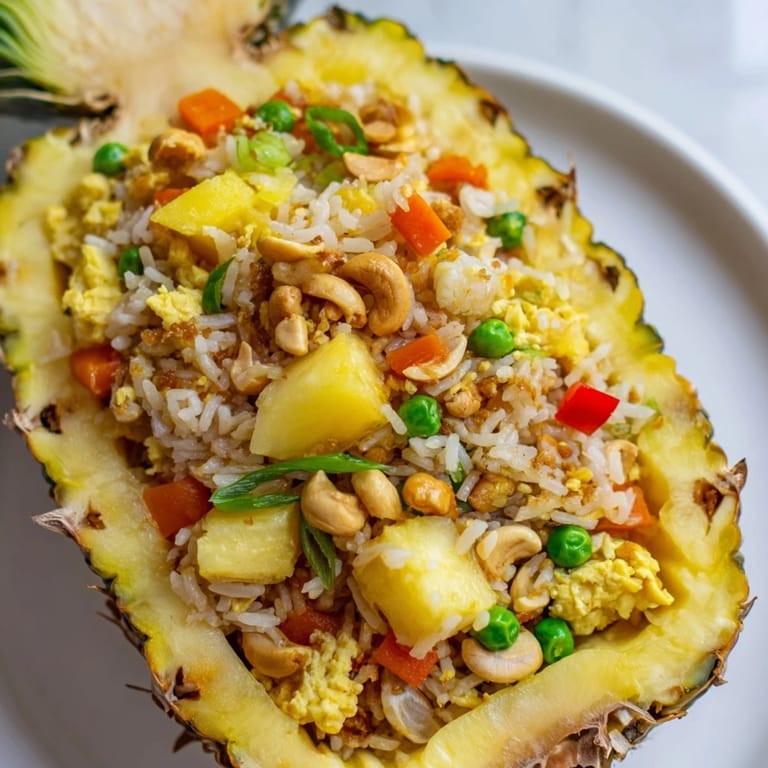
 The first time I served pineapple fried rice, my kitchen filled with the most unexpected aroma—toasted cashews mingling with curry and fresh cilantro in a way that made everyone stop talking and just breathe it in. I'd been intimidated by the hollow pineapple presentation, thinking it required some culinary magic I didn't possess, but once I carved into that golden fruit and watched the rice tumble in, I understood: this dish is pure theater meets comfort food. There's something magical about eating from a fruit bowl that doubles as your plate, and the sweetness of the pineapple plays against the savory rice in ways that feel both surprising and somehow inevitable.
I remember making this for my sister's birthday potluck on a humid summer afternoon, and I was so worried the pineapple would oxidize before we ate that I kept it in the fridge right up until serving time. When I brought it out, still steaming, condensation beading on that golden shell, everyone gasped—and suddenly I wasn't nervous anymore. That moment taught me that presentation isn't shallow; it's part of the joy of eating together.
Ingredients
- 1 large ripe pineapple: Choose one that gives slightly when you press the base and smells sweet—this is where half your flavor comes from, so pick one you'd actually want to eat.
- 3 cups cooked jasmine rice (preferably day-old): Fresh rice will steam and clump; let it rest in the fridge overnight and it becomes the perfect vehicle for every flavor.
- 2 tablespoons vegetable oil: You want something neutral and high-heat tolerant; peanut oil works beautifully if you have it.
- 1 small onion, finely diced: This builds your flavor foundation—don't rush this step, let it soften and turn golden.
- 2 cloves garlic, minced: Minced, not sliced; you want it to practically dissolve into the oil and perfume everything.
- 1 medium carrot, diced: Cut small enough that it cooks through in the 2–3 minute window; thin bias cuts work beautifully.
- 1 red bell pepper, diced: The color is essential here, but so is the slight sweetness that echoes the pineapple.
- 2 eggs, lightly beaten (optional): They add richness and help coat the rice grains; skip them for vegan but don't feel bad about it.
- 1/2 cup frozen peas: Frozen means they hold their shape and stay bright green; thawed fresh peas fall apart in the heat.
- 1/2 cup unsalted roasted cashews: The textural anchor of this dish—they stay crisp and add luxury without overshadowing anything.
- 1/2 cup pineapple flesh, diced: Save this from your hollowing—it should be tender but still intact, adding sweetness and subtle tartness.
- 3 scallions, sliced: Green and white parts separate; white goes in with the aromatics, green at the end for fresh bite.
- 1/4 cup raisins or golden sultanas (optional): They plump up slightly in the heat and add another layer of sweetness that most people don't expect.
- 2 tablespoons soy sauce: Use tamari if anyone needs gluten-free; it's the savory backbone that makes everything else taste like more of itself.
- 1 tablespoon fish sauce (optional): A controversial ingredient, I know, but one teaspoon would add umami depth without making anything taste fishy.
- 1 teaspoon curry powder: This is your spice bridge—a gentle, warm note that ties Thai to comfort.
- 1/2 teaspoon white pepper: Finer and more delicate than black pepper, it disappears while adding subtle heat.
- 1 teaspoon sugar: This isn't about sweetness; it's about balance, rounding out the savory notes.
- Salt, to taste: Taste constantly as you go—you're aiming for that moment where you can't quite identify salt but suddenly everything tastes like itself.
- Fresh cilantro leaves and lime wedges for garnish: These finish what the pan started, adding brightness and a little astringency that wakes up your palate.
Tired of Takeout? 🥡
Get 10 meals you can make faster than delivery arrives. Seriously.
One email. No spam. Unsubscribe anytime.
Instructions
- Prepare your pineapple vessel:
- Slice your pineapple in half lengthwise, leaving those dramatic leaves attached—they're not just pretty, they're your handle. Carefully carve out the flesh, angling your knife to leave about a 1/2-inch shell; take your time here because pineapple shells are delicate and you'll want them to hold rice without splitting.
- Build your aromatic base:
- Heat oil in your wok over medium-high heat until it shimmers slightly. When you add the onion, you should hear an immediate sizzle; let it cook for about a minute with the garlic until the whole kitchen smells like possibility.
- Soften your vegetables:
- The carrot and bell pepper need 2–3 minutes of aggressive stirring to begin softening without losing their color. Listen for the sound of them hitting the hot pan—that's how you know your heat is right.
- Scramble the eggs (if using):
- Push everything to one side and pour in your beaten eggs; they'll set almost immediately, so scramble gently and break them into bite-sized pieces rather than long ribbons. This takes maybe 30 seconds.
- Introduce your rice:
- Add the cold rice all at once and immediately start breaking up clumps with your spatula or spoon; this is your moment to find any hidden clusters hiding at the bottom. The heat will warm everything through in about a minute of constant stirring.
- Layer in the remaining ingredients:
- Fold in the peas, diced pineapple, cashews, and raisins; you're looking for even distribution, so take a breath and make sure nothing is hiding in one corner of the pan. Everything should be warm and glistening.
- Season boldly:
- Add soy sauce, fish sauce if you're using it, curry powder, white pepper, sugar, and salt; stir constantly for 2–3 minutes, tasting as you go, because this is where all your careful ingredient selection comes together into something greater than its parts.
- Finish with fresh notes:
- Toss in the sliced scallions in the last 30 seconds and remove from heat immediately; they should stay bright green and crunchy, a contrast to everything warm and soft below them.
- Make it beautiful:
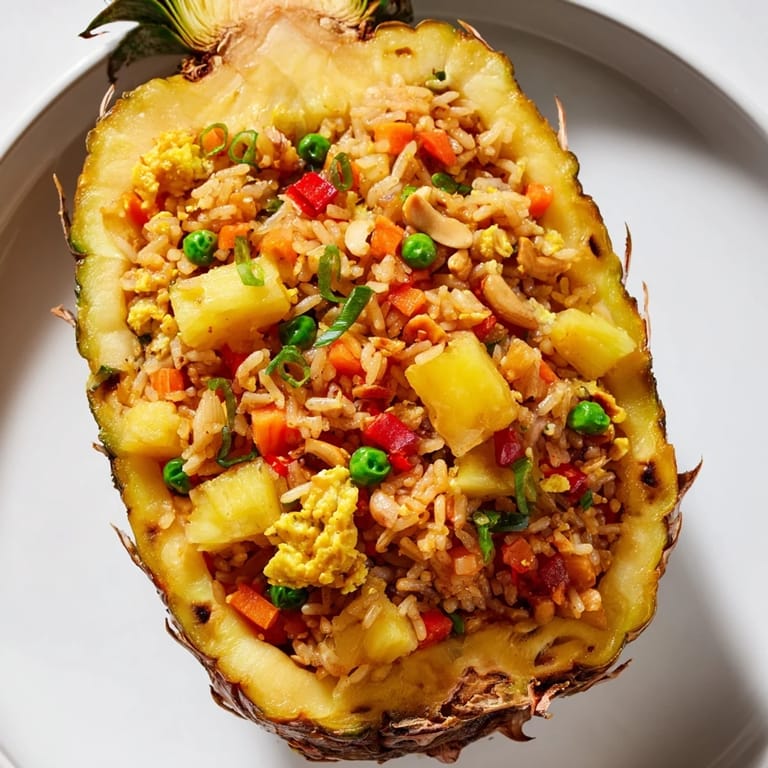
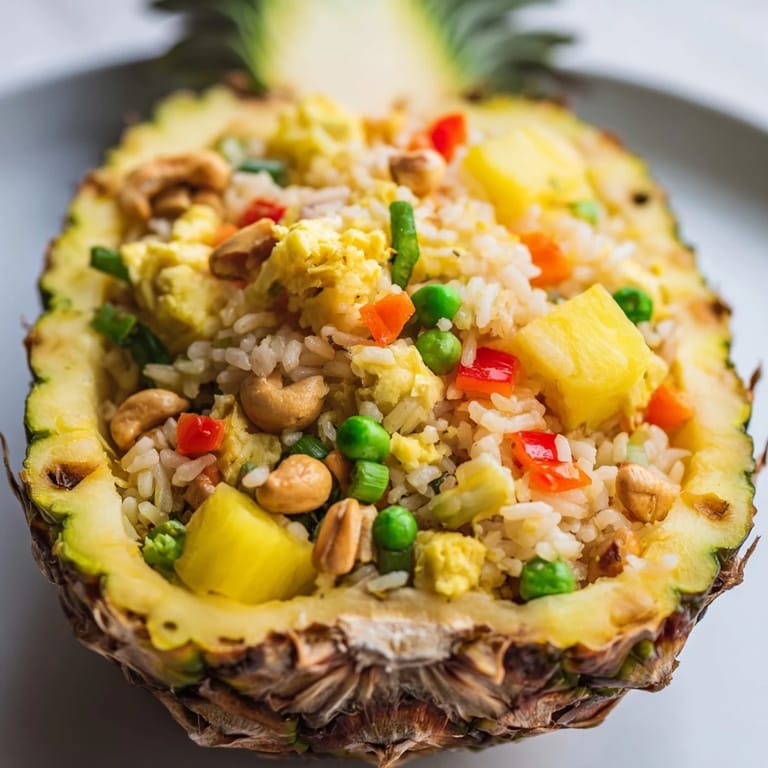
- Spoon the fried rice generously into your pineapple halves—pile it a little, let it overflow slightly, because this is theater and abundance is part of the story. Crown it with cilantro and set out lime wedges for squeezing.
 Épingler
 One winter evening, a friend who'd never eaten Thai food before took a bite and closed her eyes—then opened them and said it tasted like summer inside a fruit. That's when I realized this dish isn't just clever; it's a moment where cooking becomes a small kind of magic, turning simple ingredients into something that tastes like a vacation you can hold in your hands.
Why Day-Old Rice Matters More Than You Think
The first time I made this with fresh rice, I learned a humbling lesson: every grain was coated in a thin layer of starch that turned sticky the moment it hit the heat, and what should have been fluffy and separated turned into something approaching risotto. Day-old rice has had time for the starch to set; it's firmer and individual grains stay distinct even under the assault of high heat and constant stirring. If you only have fresh rice, spread it on a baking sheet and refrigerate it uncovered for at least an hour; you're essentially mimicking the drying process that naturally happens overnight.
The Art of Pineapple Carving (Without Disaster)
Hollowing a pineapple looks intimidating until you realize the flesh wants to separate from the shell—you're working with nature, not against it. A sharp knife makes all the difference; a dull one will slip and tear the flesh instead of cutting cleanly. Angle your blade at about 45 degrees and work around the perimeter first, then use a large spoon to gently ease the carved flesh away from the shell. The trickiest part isn't the carving; it's not puncturing the bottom. Go slow, work your way around, and take breaks if your hands get tired—a pineapple can wait.
Flexibility Without Compromising Flavor
This recipe adapts beautifully without sacrificing its identity, which is rare and wonderful. For protein, stir in cooked shrimp or chicken in the same moment you'd add the cold rice, giving them just enough time in the heat to warm through without overcooking. Tofu works too—press it well first, cube it small, and let it get slightly crispy on the edges before everything else comes in. For extra heat without changing the flavor profile, serve alongside Thai chili sauce and let people control their own intensity. The single non-negotiable element is the pineapple itself; everything else is a suggestion.
- Protein additions cook fastest if they're already cooked: Shrimp from the freezer defrosts in the warm rice; leftover rotisserie chicken shreds beautifully.
- Make it fully vegan by omitting eggs and fish sauce: The soy sauce and curry powder carry all the umami you need.
- This reheats better than most fried rice: Cover loosely and warm gently in a skillet, and it stays separate and vibrant instead of turning dense.
 Épingler
 This recipe taught me that some dishes are more about the moment than the ingredients—it's about gathering around something beautiful and tasting the care that went into it. Make this when you want to impress, or make it when you just want to remember why cooking matters.
Questions fréquentes sur la recette
- → Quel type de riz est recommandé ?
Le riz jasmin, idéalement cuit la veille, offre une texture parfaite pour ce plat sauté.
- → Comment conserver la douceur de l'ananas ?
Utilisez un ananas bien mûr et ajoutez les morceaux en fin de cuisson pour préserver leur saveur sucrée.
- → Peut-on adapter ce plat pour un régime végétalien ?
Oui, en omettant les œufs et la sauce poisson, on obtient une version végétalienne savoureuse.
- → Quels substituts de protéines sont recommandés ?
Le tofu, les crevettes ou le poulet grillé s’intègrent parfaitement pour enrichir le plat.
- → Comment réussir la présentation dans l'ananas ?
Creusez délicatement l'ananas en gardant la peau intacte pour y disposer le mélange chaud juste avant de servir.