 Épingler
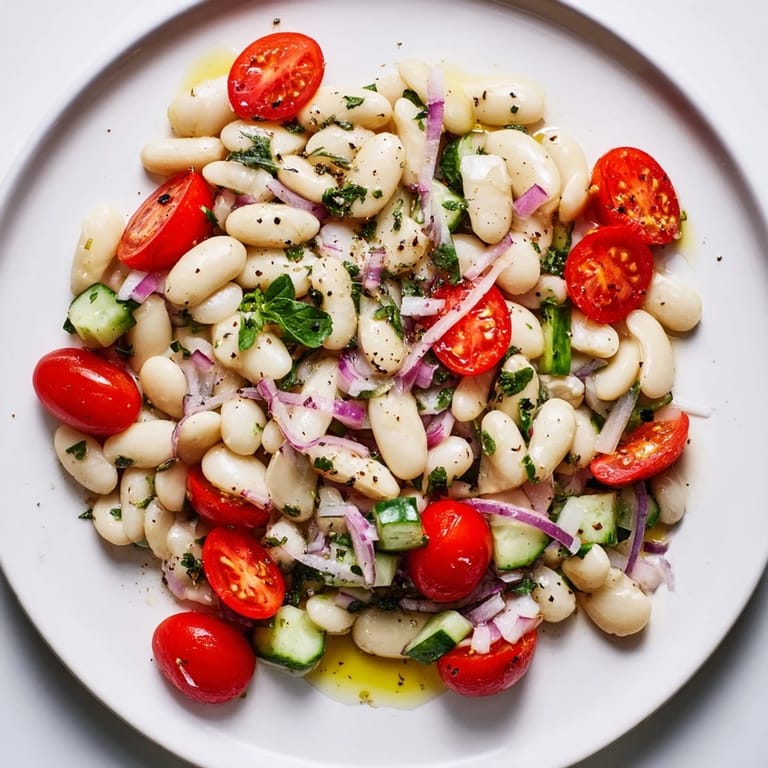
 There's something magical about assembling a salad on a warm afternoon when the farmers market is still humming in your memory. A friend brought this white bean salad to a potluck last summer, and I watched people go back for thirds, piling their plates high with something so simple it barely seemed like a recipe. The beans were creamy, the tomatoes burst with sweetness, and the herbs made everything sing without trying too hard. I finally asked for her secrets, and what she shared was less about technique and more about trusting good ingredients to do most of the work. Now it's become my go-to when I want something that tastes like it took hours but only steals fifteen minutes.
I made this for a picnic in late August when the kitchen felt too hot to turn on the stove, and serving it ice-cold from the fridge became the moment everyone relaxed. There's a particular kind of satisfaction in feeding people something nourishing when the weather refuses to cooperate with your cooking plans, and this salad answered that call without complaint. My brother, who claims to dislike salads, ate two full bowls before admitting the combination of creamy beans and fresh basil somehow changed his mind. That quiet victory—converting a skeptic with something honest and well-balanced—reminded me why I keep coming back to this one.
Ingredients
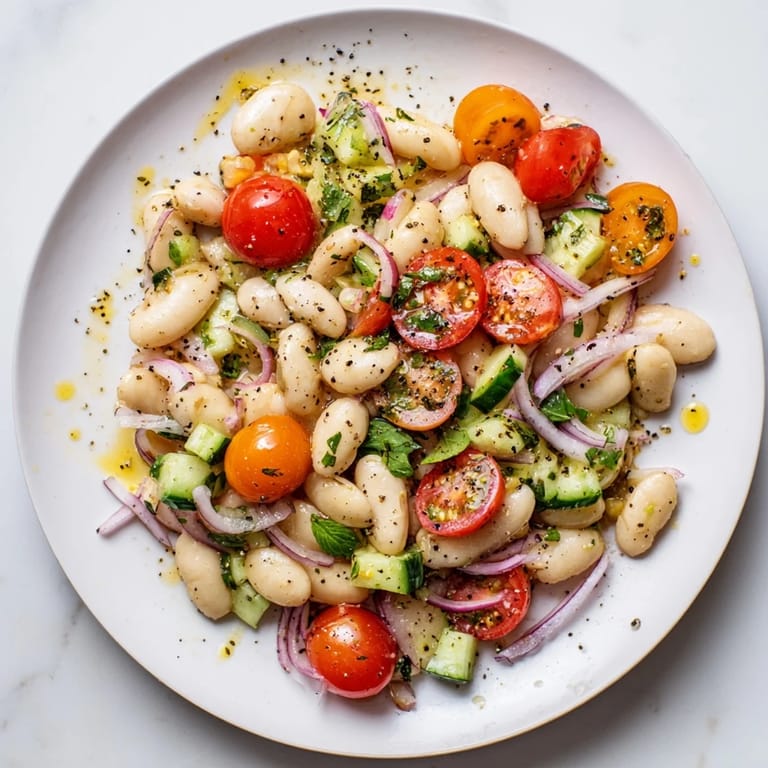
- Cannellini beans: Two cups of canned beans, drained and rinsed thoroughly, because the starch that clings to them can make your dressing turn cloudy and dull. I learned this the hard way and now it's the one non-negotiable step.
- Cherry tomatoes: One cup halved, chosen when they're at their peak ripeness because the quality of the tomato carries the entire salad. Pale, mealy tomatoes will let you down.
- Red onion: One small onion, finely diced, adds a sharp bite that keeps everything from tasting flat. The thinness of the cut matters—rough chunks won't soften into the dressing properly.
- Fresh herbs: One-quarter cup parsley, two tablespoons basil, and one tablespoon fresh oregano (or one teaspoon dried) layered together create depth that feels earned rather than forced.
- Extra-virgin olive oil: Three tablespoons of good oil, the kind you'd taste on bread, because it's truly tasted here and there's nowhere for mediocre oil to hide.
- Red wine vinegar: One tablespoon, or swap for lemon juice if you're in a bright mood and want the salad to lean citrus instead of tangy.
- Sea salt and black pepper: Half a teaspoon and one-quarter teaspoon respectively, though these are starting points, not laws. Taste as you build.
- Optional Kalamata olives and feta cheese: Both add salt and richness if you're serving this as a main course rather than a side, but honestly, the salad stands perfectly well alone.
Tired of Takeout? 🥡
Get 10 meals you can make faster than delivery arrives. Seriously.
One email. No spam. Unsubscribe anytime.
Instructions
- Gather and wash your beans:
- Drain your canned beans into a colander and rinse them under cool running water, stirring gently with your fingers so the water runs clear. This removes the cloudy liquid that would muddy your dressing and make the beans taste canned rather than fresh.
- Build the foundation:
- In a large bowl, combine your drained beans with the halved tomatoes, finely diced red onion, minced garlic, and diced cucumber if you're using one. Toss everything together so the beans get to know the vegetables before the dressing arrives.
- Add your green notes:
- Scatter your chopped parsley, basil, and oregano over everything, stirring gently so the herbs distribute evenly. If you're using fresh oregano and haven't chopped it yet, this is the moment to tear it by hand for the most fragrant release.
- Whisk your dressing:
- In a small bowl, combine your olive oil, vinegar (or lemon juice), salt, and pepper, whisking briskly until the mixture turns pale and slightly thick. This emulsification takes only a minute but makes the difference between a dressing that clings and one that pools at the bottom.
- Bring it all together:
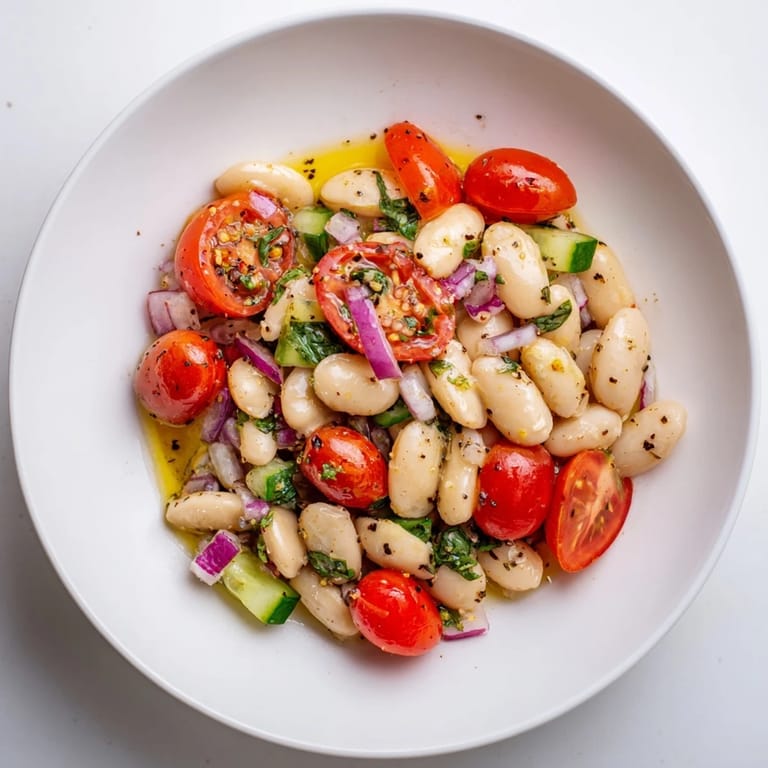
- Pour your dressing over the salad and toss gently but thoroughly, making sure the beans and vegetables get coated evenly. The moment the dressing touches the warm beans, the flavors begin their conversation.
- Final touches:
- If you're using olives and feta, fold them in gently to avoid breaking the cheese. Taste and adjust your salt and pepper—this is your moment to claim the recipe and make it yours.
 Épingler
 This salad became my answer to a question I didn't know I was asking: how do you make people feel cared for without spending hours in the kitchen? Watching my partner come home and immediately grab a bowl of this from the fridge, eating it standing up over the sink with that satisfied look, taught me that simple food can be the most generous food.
Make It Your Own
The beauty of this salad is how easily it welcomes additions without losing its identity. Add a handful of arugula or spinach for extra greens and a slight peppery note, or toss in some diced bell pepper if you want sweetness and crunch. I've made it with navy beans when cannellini weren't available and honestly couldn't tell the difference—great northern beans work too if that's what you have. The herbs are suggestions, not commands; if you love cilantro more than parsley, make that swap with confidence. This is a salad that invites experimentation while staying true to its Mediterranean roots.
Pairing and Serving
Serve this salad chilled or at room temperature alongside grilled fish, roasted chicken, or simply with thick slices of crusty bread for soaking up the oil and vinegar at the bottom of the bowl. It travels well to picnics and potlucks in a sealed container, staying fresh and flavorful for a day or two in the refrigerator. I've served it alongside gazpacho on hot days, next to pasta salads at gatherings, and as a standalone lunch when I wanted something that felt both light and satisfying. The flexibility of this salad—how it plays well with others without demanding to be the star—makes it endlessly useful in rotation.
Storage and Make-Ahead Tips
This salad actually improves when made a few hours ahead, so it's the rare dish that rewards meal prep planning instead of penalizing it. Keep the dressing separate if you're storing it for more than a day, then toss everything together just before serving to maintain the best texture. If you've already combined it and notice the bottom layer of beans has absorbed most of the dressing, simply add another splash of olive oil and vinegar to revive it. This is forgiving food, the kind that doesn't demand perfection and still tastes wonderful.
- Make it up to two days ahead, storing the beans and vegetables in an airtight container and adding dressing when you're ready to serve.
- If serving cold, take it from the refrigerator fifteen minutes before eating so the olive oil can soften back into fluidity and the flavors can warm up slightly.
- Leftovers transform into a grain bowl base if you happen to have cooked farro or rice on hand—the salad becomes the dressing for something new.
 Épingler
 This white bean salad has become one of those quiet victories in my kitchen, the kind of recipe that doesn't ask for much but gives back generously in satisfaction and simplicity. Make it once and you'll understand why it never leaves the rotation.
Questions fréquentes sur la recette
- → Quels haricots sont utilisés dans cette salade ?
Les haricots cannellini, doux et crémeux, sont privilégiés pour leur texture délicate et leur goût neutre qui se marient bien avec les autres ingrédients.
- → Peut-on remplacer les haricots cannellini ?
Oui, d'autres variétés comme les haricots blancs du nord ou navy peuvent être utilisées selon la disponibilité ou la préférence.
- → Quelle vinaigrette accompagne cette salade ?
Une vinaigrette simple à base d'huile d'olive extra-vierge, de vinaigre de vin rouge (ou jus de citron), de sel et de poivre apporte fraîcheur et équilibre.
- → Peut-on préparer cette salade à l'avance ?
Il est conseillé de la laisser mariner quelques heures au frais pour que les saveurs se mêlent parfaitement, sans toutefois ajouter la feta avant le service.
- → Quels accompagnements conviennent avec cette préparation ?
Cette salade s'accorde bien avec du poisson grillé, du poulet ou du pain croustillant, apportant équilibre et fraîcheur au repas.
- → Comment rendre cette salade vegan ?
Il suffit d’omettre la feta ou de la remplacer par un substitut végétal pour conserver un plat 100% végétalien.