 Épingler
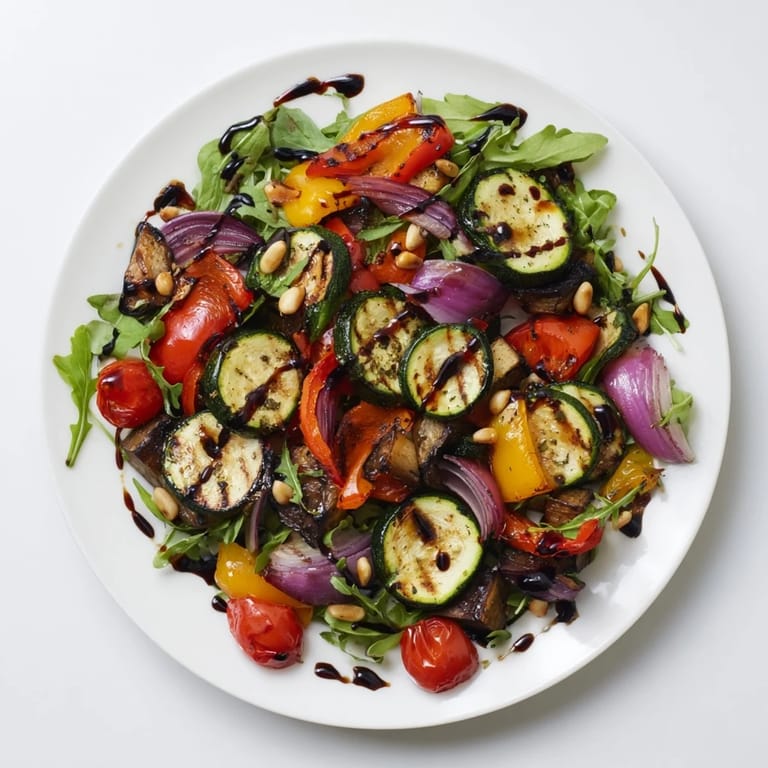
 I discovered this salad on a late September afternoon when my garden was bursting with vegetables I'd planted months earlier. A friend was coming over, and I had too many zucchini and peppers sitting on the counter, so I threw them in the oven with oil and herbs, hoping for the best. What came out was warm, caramelized, and surprisingly elegant—nothing like the limp vegetable side dishes I'd made before. That one accidental meal became my go-to whenever I needed something that felt both nourishing and special.
The first time I served this to my sister's family at a potluck, my nephew—who claims to hate vegetables—asked for seconds. He couldn't believe the peppers were sweet enough to eat, and the caramelized edges had him convinced I'd added sugar. I hadn't, but I let him keep thinking that because watching him discover vegetables taste good felt like a small victory.
Ingredients
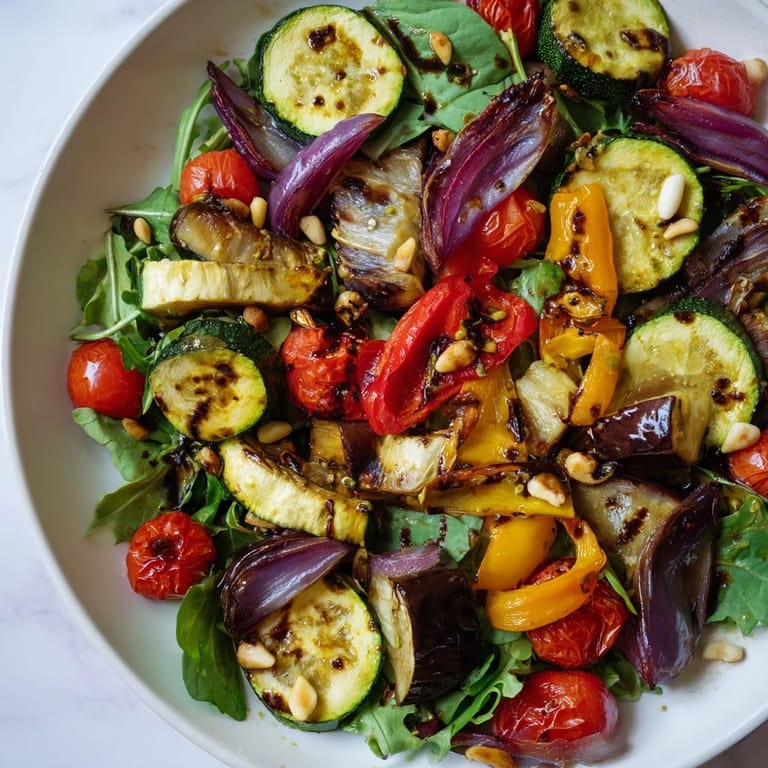
- Zucchini: A medium one keeps it tender without turning watery; slice thick enough that it won't collapse into the pan.
- Red and yellow bell peppers: These sweeten as they roast, so 1-inch pieces let them caramelize without turning to mush.
- Red onion: Cut into wedges so the layers stay together and the charred edges add a slight bitterness that balances everything.
- Eggplant: 1-inch cubes absorb the oil and herbs beautifully; don't skip the salt before cooking or it'll steam instead of roast.
- Cherry tomatoes: Halved so they burst and release juice into the bottom of the pan, creating little pools of flavor.
- Olive oil: 2 tbsp for the vegetables plus 3 tbsp for the dressing; I learned the hard way that skimping here makes everything taste thin.
- Dried Italian herbs: A teaspoon is enough; fresh herbs burn in the oven, so dried ones handle the heat better.
- Mixed greens: Keep them cold until the last second and use whatever feels freshest at the market.
- Balsamic vinegar, Dijon mustard, honey: These three are the backbone of the dressing; the mustard keeps the oil and vinegar from separating, and the honey rounds out the sharpness.
- Pine nuts or walnuts: Toasted adds crunch that makes the whole dish feel more intentional; optional but worth it.
Tired of Takeout? 🥡
Get 10 meals you can make faster than delivery arrives. Seriously.
One email. No spam. Unsubscribe anytime.
Instructions
- Heat your oven and prepare:
- Preheat to 425°F and line your baking sheet with parchment paper. This temperature gives you caramelization without burning, and parchment means no cleanup later.
- Dress the vegetables:
- Toss everything in a bowl with olive oil and seasonings until every piece is coated; this is where the flavor starts, so don't rush it.
- Spread and roast:
- Lay vegetables in a single layer, then roast for 25 to 30 minutes, stirring halfway through. You'll know it's done when the edges are brown and caramelized and the vegetables feel tender when you pierce them.
- Make the dressing:
- While vegetables roast, whisk together oil, balsamic, mustard, minced garlic, and honey in a small bowl until it looks glossy and emulsified. Taste it and adjust salt and pepper—this is your last chance to balance the flavors.
- Assemble the salad:
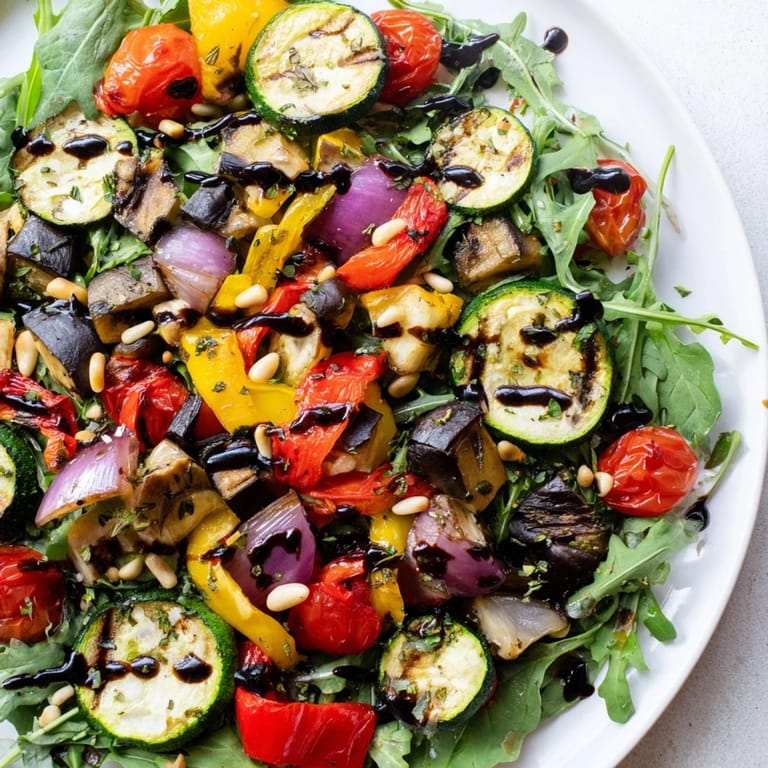
- Arrange cold greens on a platter, pile warm vegetables on top, then drizzle with dressing while everything is still warm so the flavors meld together.
 Épingler
 One cold March morning when everything felt gray and I had no energy to cook, I realized I had leftover roasted vegetables in the fridge. I threw them on some greens with yesterday's dressing, and suddenly breakfast felt like self-care instead of just eating. That's when I understood this salad wasn't really about the vegetables at all—it was about making myself feel taken care of.
Why Warm Vegetables Change Everything
Cold salads are fine, but warm roasted vegetables have a completely different energy. The heat opens up their flavors and makes the whole dish feel like something you cooked intentionally rather than something you assembled from the crisper drawer. I've noticed that people eat more of it, too—something about the warmth makes them want another bite.
Dressing Matters More Than You Think
A lot of people make homemade dressing and then act surprised when it tastes like broken salad. The secret is patience with whisking and tasting as you go. That Dijon mustard does actual work—it's an emulsifier, not just flavor—and the honey balances the vinegar's sharpness so nothing tastes aggressive. I've started making double batches because this dressing works on everything.
Ways to Make It Yours
This salad is forgiving enough to customize without falling apart. I've added roasted sweet potatoes, tossed in cannellini beans for protein, and swapped the greens for arugula when I want something more peppery. The core technique stays the same—roast vegetables until caramelized, dress them simply, let them shine.
- Add grilled chicken or crispy chickpeas if you need this to be a full meal.
- Substitute any vegetables you like; the roasting method works for carrots, Brussels sprouts, mushrooms, and cauliflower too.
- Make it ahead and assemble just before serving so the greens stay crisp and cold against the warm vegetables.
 Épingler
 This salad taught me that vegetables don't need to hide under heavy dressings or complicated preparations to taste good. Sometimes the best meals are the ones where you let ingredients do what they're built to do. That's the whole point.
Questions fréquentes sur la recette
- → Quels légumes sont utilisés pour la salade ?
La salade contient courgette, poivrons rouges et jaunes, oignon rouge, aubergine et tomates cerises.
- → Comment préparer les légumes ?
Les légumes sont coupés en morceaux, assaisonnés avec de l'huile d'olive, des herbes sèches, sel et poivre, puis rôtis au four jusqu'à tendreté.
- → Quelle est la composition de la vinaigrette ?
La vinaigrette est élaborée avec huile d'olive extra vierge, vinaigre balsamique, moutarde de Dijon, ail haché, miel, sel et poivre.
- → Peut-on servir la salade froide ?
Oui, elle peut être dégustée tiède ou à température ambiante selon les préférences.
- → Quelles garnitures sont recommandées ?
Des pignons grillés ou noix hachées, ainsi que du parmesan ou feta peuvent rehausser la texture et le goût.