 Épingler
 Last summer, I was stuck in a rhythm of boring desk lunches and wilted salads by Wednesday. Then a friend showed up with these beautiful layered jars—somehow still crisp and vibrant despite sitting in her work bag for hours. One bite of that citrus-herb dressing hitting the chickpeas, and I understood: this wasn't just a salad, it was a small act of self-care disguised as lunch prep. Now I make them every Sunday, and they've become my secret weapon for staying satisfied and energized through the week.
I made these for a potluck once, not thinking much of it, and watched three people come back asking for the recipe. There's something about the combination of bright citrus, fresh herbs, and those little pops of color that just feels celebratory, even when you're eating alone at your desk. My sister now requests them for her meal prep, and honestly, seeing her stick to her goals because of something I taught her—that's the real satisfaction.
Ingredients
- Extra-virgin olive oil: This is your dressing's backbone—use one you actually enjoy tasting because it makes all the difference in brightness and depth.
- Freshly squeezed lemon and orange juice: Bottled juice tastes flat by comparison; spend two minutes squeezing and you'll taste the difference immediately.
- Dijon mustard: Just a teaspoon acts like an emulsifier and adds a subtle tang that holds everything together.
- Fresh garlic, parsley, and mint: These herbs are what transform this from a salad into an experience—don't skip them or use dried.
- Chickpeas: Rinse them well to remove the canning liquid, which can make your dressing watery and dull.
- Cucumber, cherry tomatoes, bell pepper, and carrots: Cut everything roughly the same size so each bite feels balanced and intentional.
- Fresh dill: This is the hidden star—it plays beautifully with citrus in a way basil just can't quite match.
- Optional feta: If you add it, crumble it just before serving so it doesn't get soggy and lose its texture.
Tired of Takeout? 🥡
Get 10 meals you can make faster than delivery arrives. Seriously.
One email. No spam. Unsubscribe anytime.
Instructions
- Make your liquid gold dressing:
- Whisk together the olive oil, citrus juices, mustard, minced garlic, and fresh herbs in a small bowl or jar until it looks glossy and well combined. The smell alone will tell you this is going to be good—that bright, herby citrus scent is your green light.
- Start at the bottom:
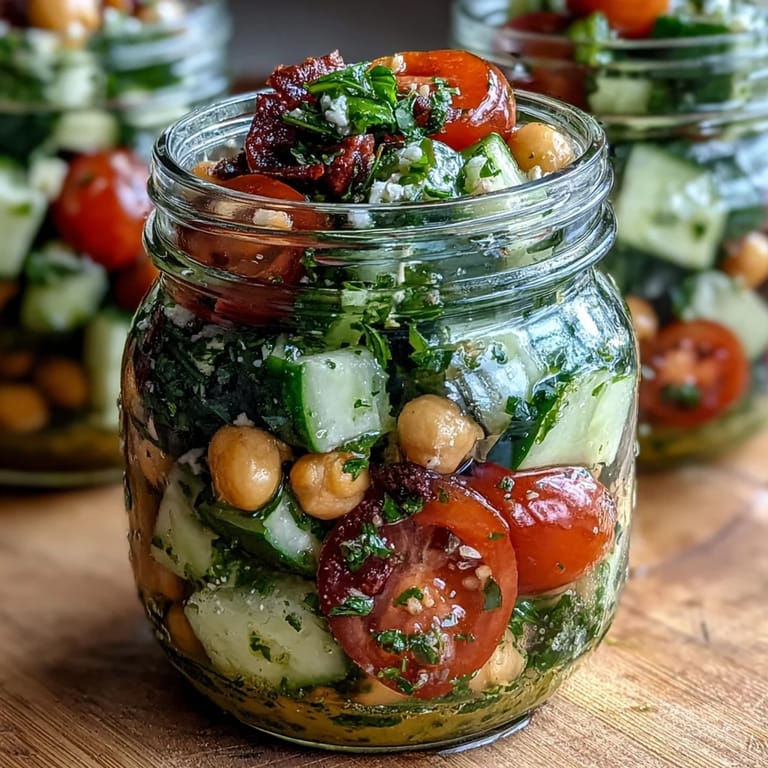
- Divide the dressing evenly among four wide-mouth mason jars, using about 1.5 tablespoons per jar as your foundation. This is crucial: the dressing sits at the bottom so it marinates everything as it sits in the fridge.
- Build your layers thoughtfully:
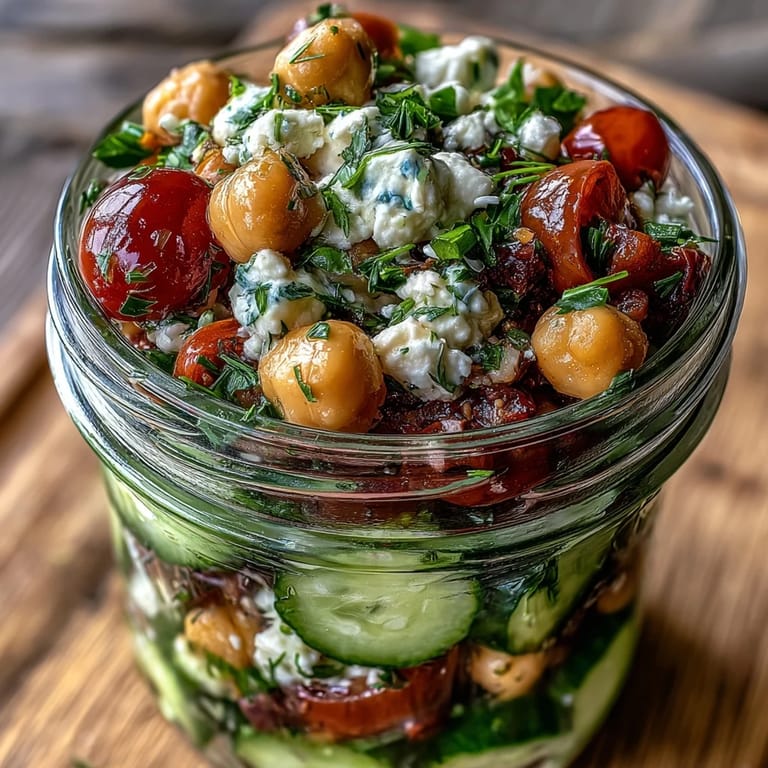
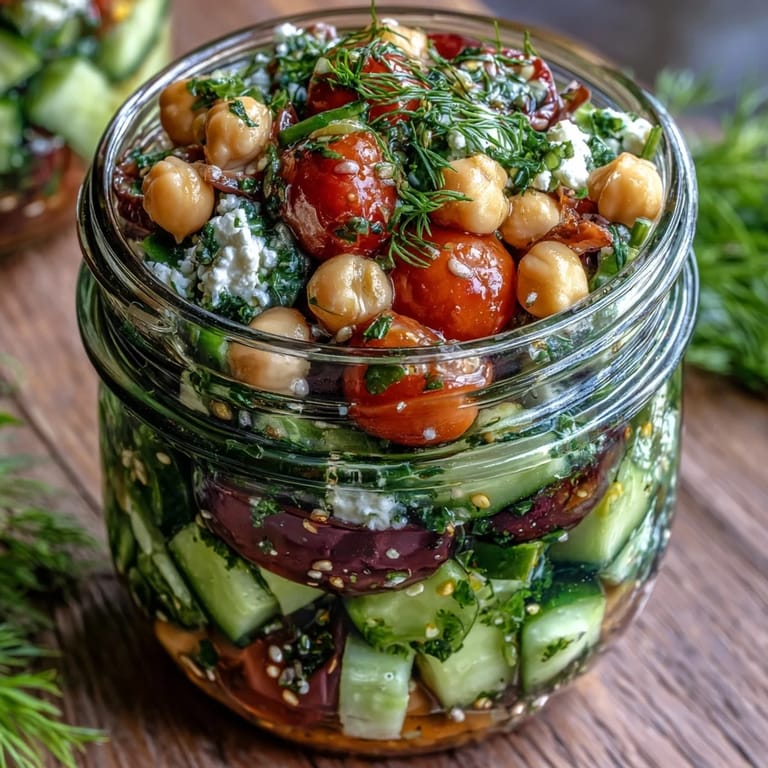
- Add chickpeas first (they're sturdy and soak up flavor), then layer in order: cucumber, bell pepper, red onion, cherry tomatoes, and shredded carrots. Think of it like creating little edible strata—each layer visible and beautiful through the glass.
- Crown with freshness:
- Top each jar with a generous handful of chopped dill and parsley, and crumbled feta if you're using it. Seal the jars tightly and slide them into the fridge.
- Shake and serve:
- When hunger strikes, give your jar a good shake to coat everything in that citrus-herb magic, or pour it into a bowl and toss if you prefer. Either way, you're moments away from a lunch that tastes like you actually have your life together.
 Épingler
 There was this morning when I grabbed a jar I'd made four days earlier, convinced it would be disappointing by then. Instead, it was somehow even more flavorful, the herbs fully infused, the chickpeas tender and bright. That's when I realized these jars aren't just convenient—they're actually a better version of salad than eating it fresh.
Why This Dressing Changes Everything
The secret to this salad's success isn't the vegetables—it's the dressing sitting at the bottom, slowly infusing every layer with citrus brightness and herbal depth. Most people make salad dressing and use it immediately, but here it gets time to develop. The garlic becomes mellower and more integrated, the mint oils deepen, and somehow the mustard just glues it all together into something you actually crave. I've taken shortcuts with pre-bottled dressing before, and it's never the same—flat, one-dimensional, missing that fresh-herb promise.
The Art of Prep Without Burnout
Sunday prep can feel overwhelming, but this recipe breaks it into manageable pieces. You're not cooking anything—just chopping vegetables and whisking a dressing, which means even if you're tired or distracted, you can pull it off in fifteen minutes. I learned to line up my cutting board with all the vegetables I need, chop everything while listening to a podcast or music, and suddenly I'm done. The meditative rhythm of chopping makes the work feel less like a chore and more like a small ritual you're doing for yourself.
Storage, Variations, and the Freedom to Adapt
These jars last up to four days in the fridge, which means you can make them Sunday and still be eating fresh salad on Wednesday—a lifesaver when the week gets chaotic and takeout calls your name. You can swap herbs freely; basil brings an Italian energy, cilantro makes it feel Mexican-inspired, and oregano leans Greek. Add grilled chicken or crispy tofu on top if you want more protein, or throw in some cooked quinoa for extra heft. The beauty of this formula is that once you understand the layering principle, you can adapt it to whatever vegetables are in season or whatever you're craving that week.
- Make the dressing in bulk and store it separately if you're prepping for the whole week—it keeps for up to five days and you can reassemble jars as needed.
- If cucumber tends to get watery, pat it dry with paper towels before adding it to the jars.
- Serve with crusty bread or over mixed greens if you want to stretch one jar into a more substantial meal.
 Épingler
 These jars have become more than meal prep for me—they're a promise I make to myself that I'm worth the effort, even on the busiest weeks. That's the real magic here.
Questions fréquentes sur la recette
- → Combien de temps les bocaux se conservent-ils au réfrigérateur ?
Les bocaux fermés se gardent jusqu'à quatre jours au réfrigérateur. La vinaigrette au fond garde les légumes frais et croquants.
- → Puis-je ajouter d'autres légumes selon les saisons ?
Absolument. Remplacez les poivrons par d'autres légumes crus comme le radis, le céleri branche ou le chou râpé selon vos préférences.
- → Comment rendre le plat plus riche en protéines ?
Ajoutez du poulet grillé, du tofu ferme, des œufs durs ou des graines de chanvre pour augmenter l'apport protéique sans compromettre la fraîcheur.
- → Quelle huile utiliser pour la vinaigrette ?
L'huile d'olive extra vierge reste idéale, mais vous pouvez opter pour l'huile d'avocat ou de noix pour varier les saveurs.
- → Est-ce adapté aux régimes sans gluten ?
Oui, tous les ingrédients sont naturellement sans gluten. Vérifiez simplement votre moutarde de Dijon pour garantir l'absence de traces.
- → Dois-je faire tremper les pois chiches en conserve ?
Non, les pois chiches en conserve sont déjà cuits. Rincez-les simplement à l'eau froide avant de les utiliser.