 Épingler
 There was this Tuesday evening when my neighbor Marco stopped by with a container of fresh spinach from his garden, still damp from the morning rain. He mentioned his nonna used to make ravioli every Sunday, and something about the way he said it made me want to try. I'd never made pasta from scratch before, but watching flour transform into silky dough under my hands felt like learning a small magic trick. That first batch of spinach ricotta ravioli, imperfect as they were, tasted like more than just dinner—they tasted like possibility.
I made these for my sister's birthday dinner last spring, and watching her face when she bit into that first ravioli—that moment when she closed her eyes and just tasted—made every flour-dusted minute worth it. She asked for the recipe immediately, and we ended up making a second batch together at midnight, laughing at how some of ours looked wonky but all of them disappeared from the plates.
Ingredients
- All-purpose flour (2 cups): This is the foundation, so use good flour if you can find it; cheap flour sometimes feels gritty when you're working the dough.
- Large eggs (3 for dough, 1 yolk for filling): Room temperature eggs mix more smoothly into the flour, trust me on this one.
- Ricotta cheese (1 cup): Don't buy the watery kind in plastic tubs if you can help it; seek out the dense, creamy versions from Italian delis.
- Fresh spinach (1 cup, chopped): Squeeze every last drop of water from it or your filling gets mushy and sad.
- Grated Parmesan cheese (1/3 cup): Grate it yourself if possible—pre-shredded always tastes like dust to me.
- Nutmeg (1/4 tsp): This tiny pinch is what makes people say the filling tastes like heaven, so don't skip it.
- Marinara sauce (2 cups): Make your own if you're feeling brave, but a good jarred sauce saves time without shame.
- Fresh basil and extra Parmesan: These finishing touches aren't optional—they're what turn ravioli into an experience.
Tired of Takeout? 🥡
Get 10 meals you can make faster than delivery arrives. Seriously.
One email. No spam. Unsubscribe anytime.
Instructions
- Build your pasta foundation:
- Mound flour on your counter, press a well in the center with your fingers, crack eggs into it, and add salt. Using a fork, gently beat the eggs like you're making scrambled eggs, then slowly drag flour in from the walls. When it gets too thick to mix with a fork, get your hands in there and start kneading.
- Knead until your arms remember:
- Work the dough for 8 to 10 minutes until it feels smooth and elastic; you'll know it's ready when it springs back when you poke it. Wrap it in plastic and let it rest for 30 minutes—this is non-negotiable, as the dough needs to relax.
- Prepare the filling with care:
- Wilt your spinach (steam it gently or sauté it briefly), then squeeze it almost violently dry in a clean kitchen towel. Mix it with ricotta, Parmesan, egg yolk, nutmeg, salt, and pepper until it tastes like something you want to eat on a spoon.
- Roll the pasta sheets thin:
- Divide dough in half and roll each piece until it's nearly translucent—about the thickness of a dime. If you don't have a pasta machine, a rolling pin works, but it requires patience and a good playlist.
- Shape with intention:
- Place small teaspoons of filling 2 inches apart on one sheet, brush the edges between filling with water, then lay the second sheet on top and press gently around each mound. Cut into squares or circles and press the edges with a fork to seal them properly.
- Cook until they float:
- Bring salted water to a gentle boil, slide the ravioli in gently so they don't stick, and watch—they're done when they float to the surface, usually in 3 to 4 minutes. Lift them out with a slotted spoon like you're rescuing them.
- Finish with warmth and flavor:
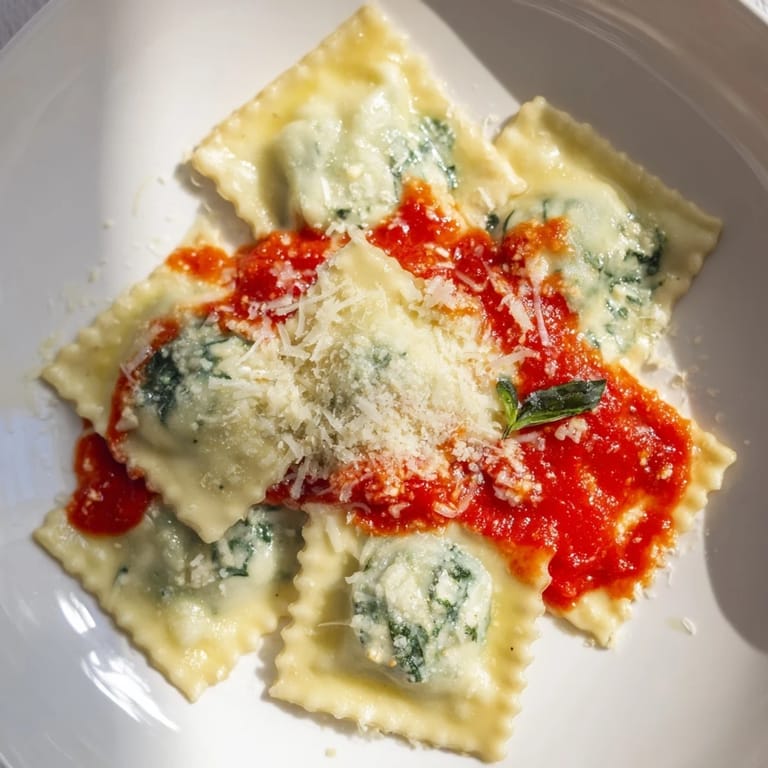
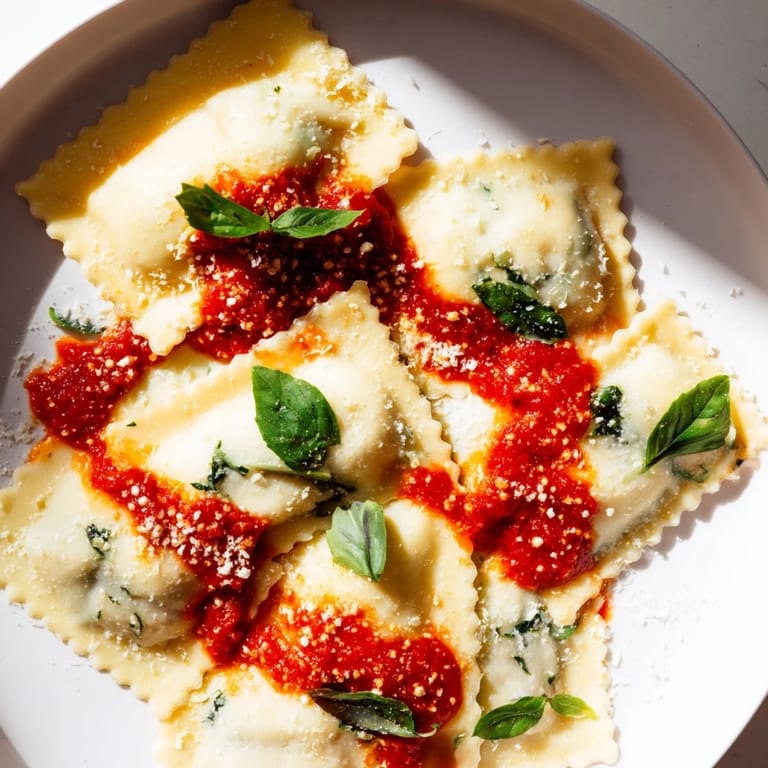
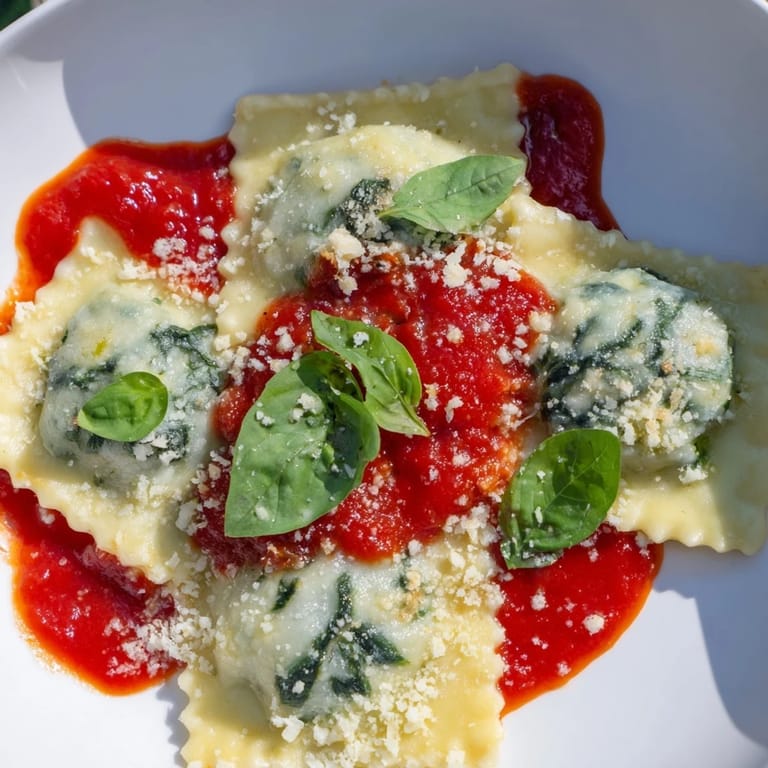
- Heat olive oil in a saucepan, sauté minced garlic until fragrant, add your marinara sauce, season with salt and pepper, and let it bubble gently for 5 minutes. Spoon sauce onto warm plates, top with ravioli, add more sauce, then scatter fresh basil and Parmesan on top.
 Épingler
 There's something almost meditative about pressing the ravioli closed with the tines of a fork, watching the pattern emerge line by line. When everything comes together—the moment you pull those little pillows from boiling water and they float to the surface, glossy and perfect—you understand why people have been making this dish for centuries.
The Secret of Good Pasta
Good pasta dough is about feeling, not just measurements. Your kitchen's humidity affects how much you need to knead; on dry days you might need a splash of water, on humid days you might need a dusting of extra flour. Pay attention to how the dough feels under your palms, not just what the recipe says. The flour you use, the eggs, even the temperature of your kitchen—all of it matters, but the dough will tell you what it needs if you listen.
Why Homemade Filling Matters
Store-bought ravioli come with filling that's been sitting and oxidizing, losing its brightness and delicate taste. Homemade filling is freshly mixed, seasoned exactly how you like it, and you can actually taste each ingredient working together. There's also the pure satisfaction of knowing exactly what's inside the pasta you're eating—no mystery additives, just four or five beautiful ingredients doing their job.
Variations and Moments of Creativity
Once you master this base, the ravioli become a canvas. I've added lemon zest when I had a bright mood, cracked red pepper flakes into the filling when I wanted something bold, and even mixed in toasted pine nuts when I wanted to impress someone. The foundation stays steady while everything else can dance around it. Each version tastes like a different moment in your kitchen life.
- Frozen spinach works just as well as fresh if it's thawed and squeezed completely dry.
- A pinch of lemon zest in the filling adds a whisper of brightness that elevates everything.
- Serve with a crisp white wine like Pinot Grigio to cut through the richness and make the meal feel complete.
 Épingler
 Ravioli are the kind of dish that reminds you why people love cooking in the first place. There's room for imperfection, room for creativity, and at the end, there's something warm and beautiful on the plate that tastes like care.
Questions fréquentes sur la recette
- → Comment préparer la pâte à ravioli ?
La pâte se réalise en mélangeant farine, œufs et sel. Après pétrissage, elle doit reposer 30 minutes avant d’être étalée finement.
- → Peut-on utiliser des épinards surgelés ?
Oui, il faut bien les égoutter et les presser pour éviter l’excès d’humidité dans la farce.
- → Comment sceller correctement les raviolis ?
Humidifiez les bords avec un peu d’eau, pressez fermement pour éviter les fuites, puis marquez avec une fourchette.
- → Quel est le temps de cuisson idéal ?
Les raviolis cuisent 3 à 4 minutes dans une eau bouillante salée, jusqu’à ce qu’ils remontent à la surface.
- → Comment parfumer la sauce marinara ?
Faites revenir l’ail dans l’huile d’olive avant d’ajouter la sauce. Salez, poivrez et laissez mijoter 5 minutes.
- → Avec quel vin accompagner ce plat ?
Un vin blanc sec comme un Pinot Grigio accompagne bien la fraîcheur des épinards et la richesse de la ricotta.