 Épingler
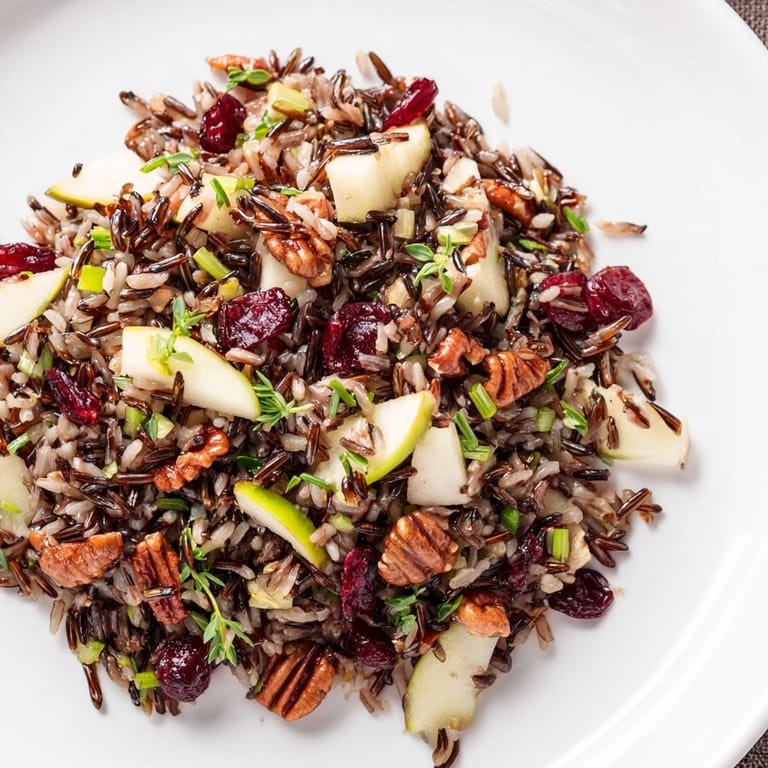
 There's something about November that makes me crave wild rice—maybe it's the way the grains look like tiny jewels in the pot, or how they remind me of walks through the Minnesota woods where they actually grow. Years ago, I discovered this salad at a harvest potluck where it sat beside three casseroles and somehow vanished first. The first time I made it myself, I burned the pecans while daydreaming about the weather changing, but even slightly charred, they added something wonderful to the whole dish. Now it's become my go-to when I need something that feels both simple and special, a salad that proves you don't need complicated techniques to make people feel nourished.
I remember bringing this to my sister's Thanksgiving when she was stressed about hosting for the first time, and watching her eyes light up when she tasted it was worth every minute of prep. She kept asking what was in it, suspicious that something this good couldn't possibly be easy to make. It became a tradition—now she won't let me show up without it, even though it takes just over an hour from start to finish.
Ingredients
- Wild rice: Don't rinse it too aggressively or you'll lose those delicate grains—just a gentle splash under cool water is all you need.
- Water: Use exactly 2 cups; too much and you'll end up with mushy rice, too little and you'll hear the dry pan calling to you.
- Salt: A half teaspoon in the cooking water makes all the difference in how the rice tastes on its own.
- Dried cranberries: The tart sweetness is what keeps this salad from being one-note; they're absolutely essential.
- Pecans: Toast them yourself if you can—the moment they smell amazing is your signal to take them off the heat.
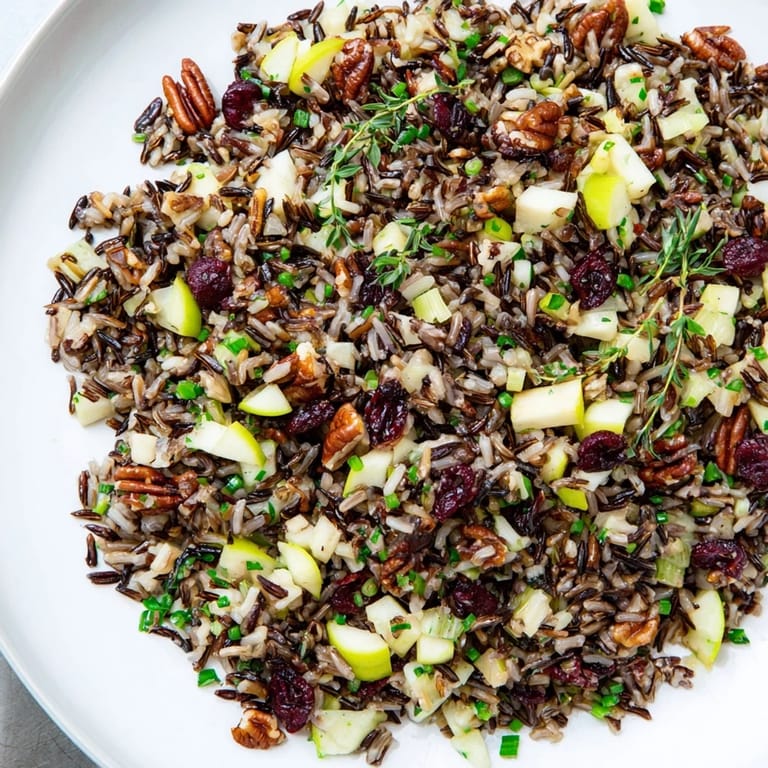
- Apple: Optional, but it adds a fresh crunch that makes the whole thing feel like autumn in a bowl.
- Green onions, parsley, chives, and thyme: These aren't just garnish; they're what make you taste each component rather than just a mushy bowl.
- Extra-virgin olive oil: This is where quality matters—a good oil changes the entire experience of the vinaigrette.
- Apple cider vinegar: It's tangy without being harsh, and it echoes the apple and dried fruit notes already in the salad.
- Maple syrup or honey: Just enough sweetness to balance the vinegar, nothing more.
- Dijon mustard: A small amount keeps everything from tasting too simple, adding depth you might not be able to name but definitely taste.
Tired of Takeout? 🥡
Get 10 meals you can make faster than delivery arrives. Seriously.
One email. No spam. Unsubscribe anytime.
Instructions
- Rinse and cook the wild rice:
- Rinse the wild rice gently under cold water—you're cleaning it, not scrubbing it. In a medium saucepan, combine the rinsed rice, 2 cups of water, and salt, then bring it to a boil over medium-high heat. Once it's boiling, turn the heat down low, cover it with a lid, and let it simmer for 40 to 45 minutes, until the grains are tender and some have started to burst open—that's when you know it's done. Drain off any remaining water and set it aside to cool slightly while you move on to the next step.
- Toast the pecans:
- While the rice is cooking, put your pecans in a dry skillet over medium heat and toast them for about 3 to 4 minutes, stirring frequently. You'll know they're ready when your kitchen starts to smell like toasted nuts and you can't resist tasting one—that's the moment to pull them off the heat.
- Make the vinaigrette:
- In a large bowl, whisk together the olive oil, apple cider vinegar, maple syrup, Dijon mustard, and a generous pinch of salt and pepper. Taste it as you go—the vinaigrette should taste bright and a little sweet, not aggressively sour.
- Bring it all together:
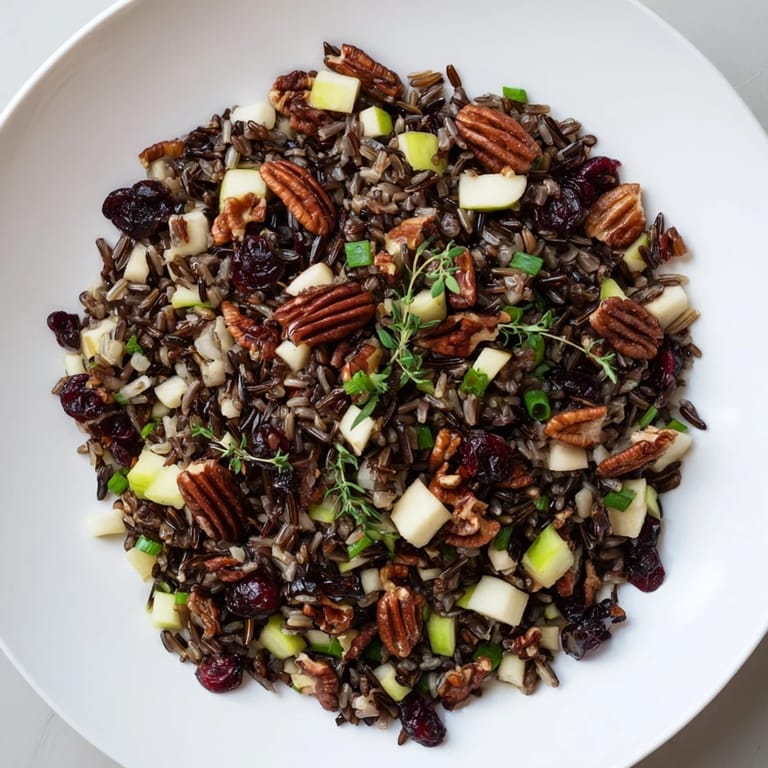
- Add the cooled wild rice, cranberries, toasted pecans, diced apple if you're using it, green onions, parsley, chives, and thyme to the bowl with the vinaigrette. Toss everything gently together until all the ingredients are coated and distributed evenly.
- Taste and serve:
- Take a bite straight from the bowl and adjust the salt and pepper if needed—everyone's preference is different, and there's no such thing as perfect seasoning before you've tasted it. Serve the salad at room temperature while everything still feels fresh, or chill it if that's what your day calls for.
 Épingler
 The moment this salad became more than just a dish in my rotation was when my neighbor tried it and asked for the recipe, then made it for her book club, then her daughter made it for a school potluck. There's something special about food that travels like that—simple enough to trust, interesting enough to remember.
Why Wild Rice Makes This Special
Wild rice isn't actually rice at all—it's a grass seed native to North America, and cooking it feels like you're doing something a little more intentional than boiling regular grains. It has this chewy texture and almost nutty flavor that doesn't need much help to be delicious. When you cook it and some of the grains burst open, those burst pieces are the most tender part, giving you texture variation in every bite that keeps things interesting. I've learned to appreciate waiting for those 45 minutes instead of rushing it, because that's when you know the rice is ready and willing to take on the other flavors around it.
Playing with Variations
The beauty of this salad is how flexible it is once you understand what's happening underneath. I've made it with walnuts instead of pecans when that's what I had on hand, and it was just as good—a little earthier, maybe, but still wonderful. Adding crumbled goat cheese is a game-changer if you want something richer; the tang plays beautifully against the sweet cranberries. Some seasons I add diced roasted beets for color and earthiness, or swap the apple for pear. The structure stays the same, but you get to make it your own each time.
Serving and Pairing Ideas
This salad is honest enough to stand alone as a light lunch, especially in warmer months when you want something satisfying but not heavy. It also pairs beautifully with roasted chicken or turkey, sliding into that perfect side-dish role at any table. I've served it chilled at summer picnics and at room temperature in the fall, and it works equally well both ways. There's something forgiving about it—it doesn't wilt, it doesn't get soggy, and if you need to make it hours ahead, it just keeps getting better.
- Serve it alongside roasted vegetables for a completely vegetarian feast.
- Pack leftovers for lunch the next day—it's one of the best salads for that.
- Make a double batch when you're cooking for a crowd; it always disappears faster than expected.
 Épingler
 This salad has taught me that sometimes the best recipes are the ones that feel effortless once you know them, that travel from hand to hand and plate to plate the way good food should. I hope it brings you the same quiet joy it brings me.
Questions fréquentes sur la recette
- → Comment cuire le riz sauvage pour cette salade ?
Rincez le riz sauvage à l'eau froide, puis faites-le mijoter dans deux fois son volume d'eau avec un peu de sel pendant 40 à 45 minutes jusqu'à ce que les grains soient tendres et éclatés.
- → Peut-on remplacer les noix de pécan ?
Oui, les noix de pécan peuvent être remplacées par des noix, amandes ou noisettes grillées selon vos préférences.
- → Comment conserver la salade ?
Conservez la salade dans un récipient hermétique au réfrigérateur jusqu'à 2 jours pour préserver la fraîcheur des ingrédients et des herbes.
- → Puis-je préparer la salade à l'avance ?
Oui, préparez le riz et la vinaigrette à l'avance et assemblez la salade juste avant de servir pour garder le croquant des éléments frais.
- → Quel est l'intérêt d'ajouter une pomme dans la préparation ?
La pomme apporte une touche sucrée et croquante qui équilibre bien les saveurs terreuses du riz et la douceur des canneberges.