 Épingler
 The first time I saw an edible lattice at a spring market, I was mesmerized by how something so architectural could feel effortless on a plate. I came home determined to recreate that precision, but with my own twist—tucking jewel-toned berries into each opening like tiny edible mosaics. What started as a way to impress guests became my favorite way to celebrate when the farmer's market finally bursts with color again.
I made this for a small brunch gathering last April, and watching people pause before eating it—actually hesitating because it seemed too beautiful to disturb—reminded me why food that engages the eye matters just as much as what hits the palate. One guest asked if I'd gone to culinary school. I hadn't; I'd just been curious enough to try something different.
Ingredients
- Asparagus stalks: Choose medium thickness so they're sturdy enough to hold the lattice without snapping, but tender enough to eat raw or barely cooked.
- Fresh chives: Long stems work best as delicate ties; they soften beautifully with just a kiss of hot water, becoming flexible without losing their grassy flavor.
- Blueberries, raspberries, strawberries, and golden berries: The mix of colors and textures is what makes this sing—use whatever looks freshest at your market.
- Extra virgin olive oil: A good quality oil matters here since there's nowhere for it to hide; it becomes part of the story.
- Flaky sea salt and black pepper: These simple seasonings let everything else shine without overwhelming the delicate vegetables and fruit.
Tired of Takeout? 🥡
Get 10 meals you can make faster than delivery arrives. Seriously.
One email. No spam. Unsubscribe anytime.
Instructions
- Blanch the asparagus until it snaps to bright green:
- Bring salted water to a rolling boil and add asparagus for just 1-2 minutes—you want that sudden color shift that signals they're tender but still have personality. Plunge them immediately into ice water to shock them into stillness, then pat completely dry so they'll hold your lattice without slipping.
- Soften the chives with a gentle heat bath:
- A quick 5-second dip in hot water transforms rigid chive stems into pliable ribbons perfect for tying. Cool and dry them thoroughly so they grip without breaking.
- Build your grid with intention:
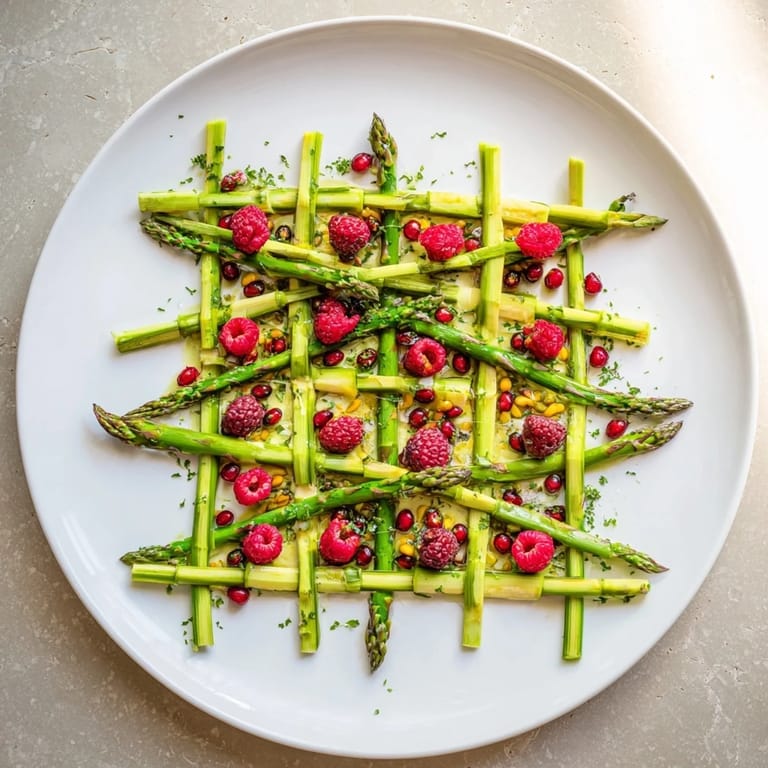
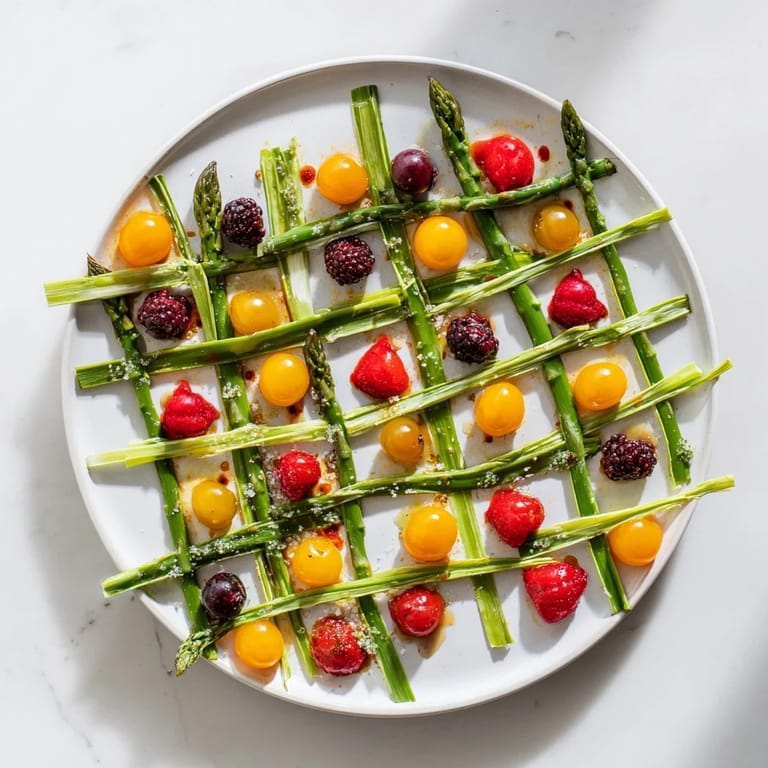
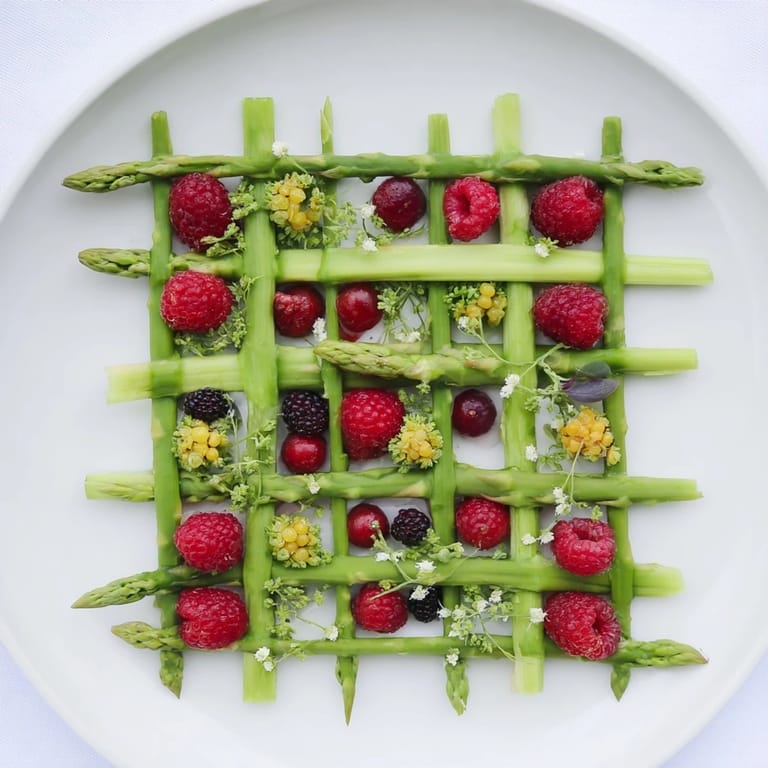
- Lay 8 asparagus stalks parallel on your platter, spacing them evenly, then weave 8 more across to create perfect squares. It feels like constructing something—and that's the point.
- Anchor the lattice with chive knots:
- Gently tie chive stems around where asparagus crosses, creating both function and a subtle visual detail. The knots should feel secure but look effortless.
- Fill each square with a rainbow of fruit:
- Nestle berries into the open squares, mixing colors and textures so no two squares look identical. This is where your palate becomes your guide.
- Finish with oil, salt, and pepper:
- A final drizzle of olive oil and sprinkle of sea salt just before serving keeps everything fresh and lets the flavors speak for themselves.
 Épingler
 The moment someone leaned over the table and said, "This is too pretty to eat," I realized this dish had crossed from appetizer into art. We all ate it anyway, and the conversation that followed was about how something this visually striking could taste so simply, so purely itself.
The Art of the Vegetable Weave
Learning to weave vegetables transformed how I think about plating entirely. It's meditative, almost like a small loom on your plate, and it teaches you that structure and spontaneity can coexist. The asparagus wants to cooperate if you handle it gently; it's not fighting you, you're just learning its language.
Why Spring Berries Matter Here
This dish only works when fruit is at its peak—berries that stain your fingers with juice and taste like summer arrived early. Using out-of-season fruit that's been traveling for weeks will leave you disappointed, so pay attention to what's actually in season where you live. The lattice is structured, but the filling should feel like you raided a berry patch.
Variations and Serving Wisdom
Once you understand the structure, you can play with what fills it. Blackberries have a different mood than raspberries, pomegranate seeds add a jeweled crunch, and even thinly sliced stone fruits work if berries aren't calling to you. The vegetable base stays the same, but the personality shifts completely.
- A whisper of balsamic glaze added just before serving adds depth without heaviness, like an unexpected alto note in a bright composition.
- Fresh mint leaves scattered across transform this from spring into early summer, changing the entire sensory experience.
- Serve chilled as a light appetizer or build it as a centerpiece for brunch—either way, let guests admire it before they dive in.
 Épingler
 This dish taught me that sometimes the most impressive meals are built on simplicity and patience, not complicated techniques. When spring arrives and the market overflows with color, this lattice becomes my celebration of the season's generosity.
Questions fréquentes sur la recette
- → Comment blanchir les asperges correctement ?
Plongez-les dans une eau bouillante salée 1 à 2 minutes, puis refroidissez-les immédiatement dans un bain glacé pour fixer la couleur et la texture.
- → Pourquoi utiliser les tiges de ciboulette pour tisser ?
Les tiges fines et flexibles de ciboulette permettent de maintenir le treillis sans l’endommager tout en apportant un parfum subtil.
- → Quels fruits peut-on substituer pour varier l’apéritif ?
On peut remplacer par des mûres, groseilles rouges ou graines de grenade selon la saison et la disponibilité.
- → Comment conserver cette préparation avant service ?
Gardez-la au frais, recouverte d’un film alimentaire, pour préserver fraîcheur et croquant jusqu’au moment de servir.
- → Peut-on ajouter des herbes aromatiques supplémentaires ?
Une touche de menthe fraîche ou un filet de glaçage balsamique peut rehausser les saveurs sans masquer la fraîcheur des ingrédients.